In short: cupping therapy is a treatment in which cups are placed on the skin and held there by suction, so the skin is drawn up into each cup; the dry version used in massage leaves the skin unbroken, but it usually leaves round marks for a while afterwards.
What is cupping therapy? It is a practice from traditional medicine in several parts of the world that has found its way into modern massage rooms. Instead of hands pressing down, a cup pulls the skin upwards, which gives a very different sensation from any other massage. If you want to try it at home, book our cupping massage in London and the session comes to you.
How does cupping work during a massage?
During a cupping massage, your therapist creates suction inside a cup and places it on bare skin, usually on the back or shoulders. The suction holds the cup in place and lifts the skin and the layer beneath it a little way into the cup.
Cups are generally used in one of two ways:
- Static. Each cup is left where it was placed for a short while, and you stay still.
- Moving. The therapist slides a cup across oiled skin, so it travels like a long, slow stroke.
The US government’s National Center for Complementary and Integrative Health (NCCIH) notes that cups can be made of “glass, ceramic, bamboo, or plastic”, and that the suction is made with heat or a suction device. In massage, silicone cups squeezed by hand and cups with a small hand pump are common, because the suction is easy to adjust.
A cupping session is often mixed with ordinary hands-on massage, before, between or after the cups. Say at the start whether you want cups for part of the hour or most of it.
What does cupping feel like?
It is usually described as a tight, pulling feeling, as if the skin is being gently lifted rather than pressed. It is a strange sensation the first time. Suction strength can be adjusted, so say straight away if a cup feels too tight, and it can be eased or moved.
Dry cupping and wet cupping: what is the difference?
There are two kinds, and they are very different treatments.
- Dry cupping leaves the skin unbroken. This is the kind used in a cupping massage.
- Wet cupping, also called hijama, involves piercing the skin. NCCIH puts it plainly: “the skin is pierced, and blood flows into the cup.” It is offered by specialist clinics, not as a massage.
Why does cupping leave marks?
The cups often leave circular marks behind, anywhere from light pink to deep red or purple. NCCIH says “cupping leaves temporary marks on the skin”. How long they last varies from person to person.
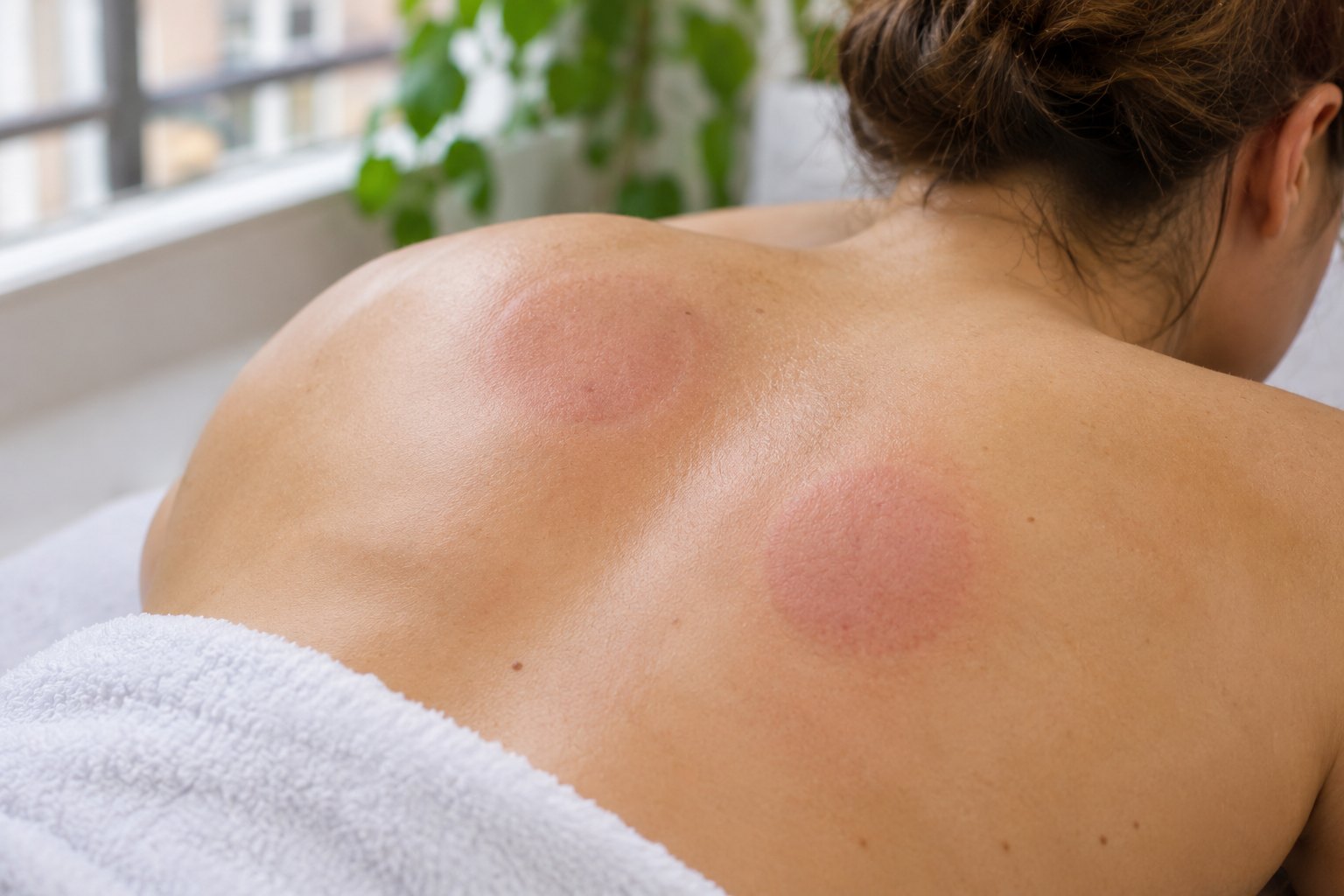
Before you book, think about what is coming up in the next week or two:
- A wedding, a party or photos where your back or shoulders will show.
- A holiday, a swim or a gym changing room, if you would rather not explain the marks.
- A medical appointment. NCCIH suggests telling your health care providers about cupping marks, so they are not misread.
If one of these is coming up soon, move the cupping to after it, ask for cups only where clothing will cover the marks, or book a cup-free massage for now.
Is cupping safe?
Dry cupping in a massage leaves the skin unbroken, but it is not for everyone. NCCIH lists possible side effects as “persistent skin discoloration, scars, burns, and infections”, and notes that cupping may worsen eczema or psoriasis.
Check before you book:
- Eczema, psoriasis or broken skin. We cannot book a cupping massage if you have an active skin condition, infection or wound in the area to be treated.
- Blood thinners, a bleeding disorder or a history of blood clots. Check with your GP first, and book once they are happy for you to have a cupping massage.
- Recent surgery or an injury in the area: check with your GP first and book once they are happy for you to have a massage.
- Pregnancy. If you are pregnant, tell us when you enquire and read our pregnancy massage page first.
Other reasons to wait or see your GP first are set out in what a mobile massage is.
Does cupping actually work?
It depends what you mean by work. If you want an unusual, deep-feeling massage with a different sensation from hands alone, cupping gives you that. If you want it to treat pain or a health condition, the evidence is weak. NCCIH says “there’s been some research on cupping, but most of it is of low quality”, and we never sell it as a treatment for a condition.
Cupping or another firm massage?
If the marks put you off but you like firm work, a deep tissue massage gives you slow, strong pressure with no cups. If you train regularly, read our guide to sports massage vs deep tissue. For everything else on the menu, see massage types compared.
How much does cupping cost?
A cupping massage is priced like all our massages: £65, £85 or £115 for 60, 90 or 120 minutes during the day, and £95, £120 or £150 at night. Ask for cupping by name when you book, so we can check which therapist is free for your date.
Book a cupping massage at home: a 60-minute Jazzy Hora is £65 during the day. Travel is additional: the minimum charge is £15 during the day and £20 at night. The exact travel charge depends on your postcode. Payment is on arrival, with no card needed to book. Send your postcode and preferred time through our online booking page.