How to Prepare for a Mobile Massage
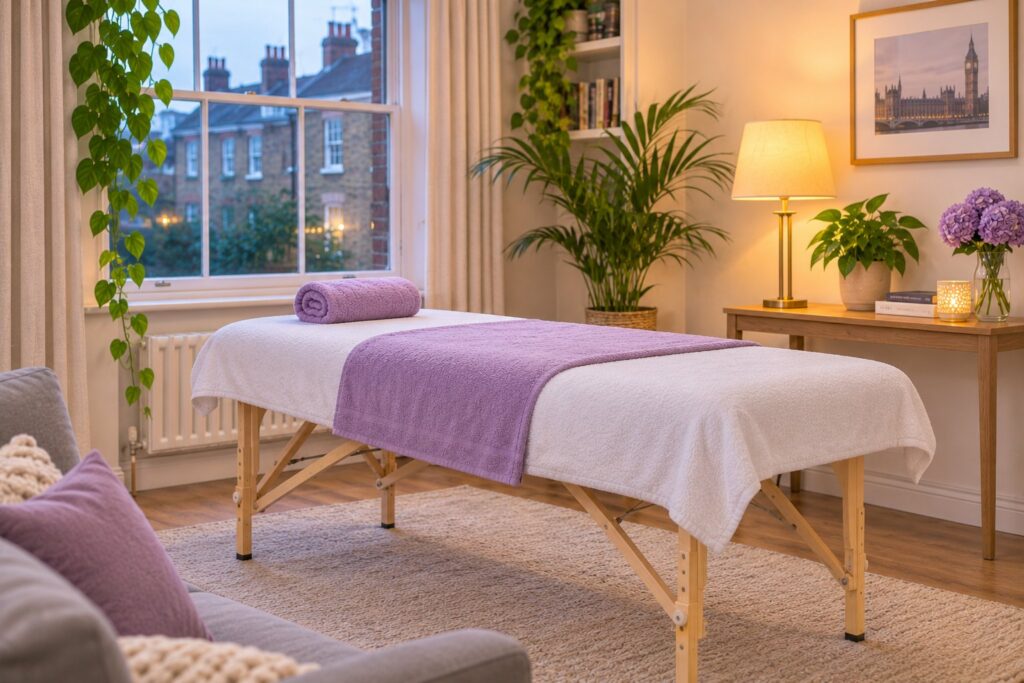
In short: to prepare for a mobile massage, clear a little floor space, have two clean towels and somewhere to wash hands, warm the room, and tell us about access and parking when you book; your therapist brings the oil, and a massage table comes on request. Preparing for a mobile massage takes a few minutes, and most of it is about the room rather than you. The aim is a warm, quiet corner of your home where you can lie down and stop thinking about anything else for an hour. If you have not booked yet, our mobile massage in London comes to you anywhere inside the M25, and how mobile massage works explains the booking steps. What do you need to have ready? Only three things are needed from you: Clear floor space. Enough room for your therapist to move around you, whether you are on a table, a bed roll or your own bed. Clean towels, ideally large bath towels. Somewhere to wash hands, before and after the massage. Oil is brought for you. Want a massage table? Ask for one at booking; some therapists also carry a bed roll. Mention where you plan to have your massage when you enquire. Where in your home should you have the massage? Choose the room with the most floor space, not the most comfortable sofa. A living room usually works better than a small bedroom, especially if you have asked for a table, because your therapist needs to walk around it. Move the coffee table, rug or chairs out of the way before they arrive. In a hotel room, space is often tighter. Push the desk chair aside, and keep the area at the foot of the bed clear. How warm should the room be? Warmer than you think. You will be lying still under a towel for an hour or more, with oil on your skin, and a room that feels fine when you are moving can feel cool once you lie down. Turn the heating up a little half an hour before your therapist arrives, and close the windows. Set the room up to switch off Small things change how the hour feels: Lighting. Soft light works best: a lamp rather than the ceiling light. Music. Put on whatever helps you switch off, quietly, or nothing at all. Phones. Silence yours, and put it out of reach. Doorbell and deliveries. If you are expecting a parcel, ask for it to be left, or plan the massage around it. Keep pets and visitors out of the room Shut pets in another room for the session. A curious dog or a cat jumping onto the towels makes it hard to relax. If there are children or housemates at home, let them know you are not to be disturbed for the hour. Help your therapist find you and get in Tell us about anything that affects your therapist getting to you when you book: Stairs and lifts. A massage table is heavy, so a top-floor flat with no lift is worth mentioning. Entry codes, concierges and hotel reception. Give us the building details and any instructions for the front desk. Parking. Let us know if parking near you is difficult or needs a permit. How should you prepare yourself? A few personal things help too: A shower beforehand is a nice way to start, if you have time. Eat lightly in the hour or two before, rather than a big meal, so lying face down is comfortable. Wear something loose that you can slip off and on again. Our guide to what to wear for a massage covers clothing, underwear and draping by treatment. Remove jewellery around your neck, wrists and ankles. Think about what you want from the hour: the pressure, the areas to focus on and anything to avoid. Unsure which massage suits you? See the types of massage we offer. What to mention before the massage starts When your therapist arrives, they will usually ask a few questions before you lie down. Mention: Any health conditions, injuries or medication, including recent surgery or blood thinners. Some situations need a GP’s go-ahead before any massage. Allergies, nuts in particular: almond oil is in the kit, alongside coconut, lavender, argan and grapeseed, mostly unscented. Pregnancy. If you are pregnant, tell us when you enquire and read our pregnancy massage page first. How firm you like it. You can change it at any time during the session. If you have a fever on the day, we cannot go ahead: see when to hold off booking. After your therapist leaves There is nowhere to go, which is the point of booking at home. Take your time getting up, drink something if you want to, and shower whenever it suits you. Our guide to what happens after a massage covers tiredness, soreness and water. Choose your treatment: a 60-minute Jazzy Hora is £65 during the day. Travel is additional: the minimum charge is £15 during the day and £20 at night. The exact travel charge depends on your postcode. Payment is on arrival, with no card needed to book. Send your postcode, the treatment you would like and your preferred time through our online booking page.
What to Wear for a Massage at Home
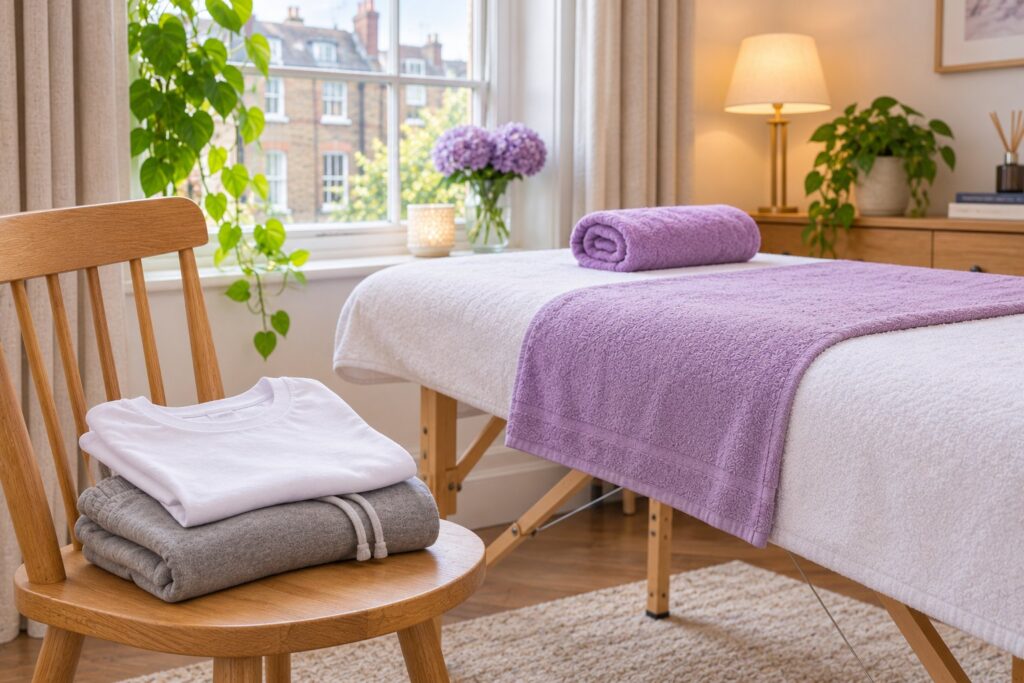
In short: what to wear for a massage depends on the treatment: for oil massages you take off as much as feels right and stay under a towel, and for reflexology, Indian head and Thai massage you can keep your clothes on; at home, the easiest choice is something loose you can slip back into afterwards. What to wear for a massage depends on the treatment, and at home it is easier than at a spa, because there is no changing room and no journey back in oily clothes. You decide how much you take off, and the towel stays over everything that is not being worked on. You also choose who comes: our female massage therapists in London visit homes, hotels and offices, and you can ask for a male therapist instead. What do you wear for each type of massage? It depends mostly on whether the massage uses oil. Treatment What you usually wear Oil? Swedish, deep tissue, Purple Classic As much or as little as you like, under a towel Yes Sports Under a towel, or thin, loose clothes if you prefer Usually Aromatherapy Undressed to your comfort, under a towel Yes, scented Lymphatic drainage Undressed to your comfort, under a towel Often none Reflexology Fully dressed; shoes and socks off Little or none Indian head massage Fully dressed, seated Optional, through the hair Thai Loose, comfortable clothes you can stretch in Usually not Still choosing a treatment? Our types of massage guide helps. Do you keep your underwear on? That is your choice. For an oil massage you can keep your underwear on or take it off, and the towel covers you throughout either way. If you keep it on, wear something you do not mind getting a little oil on, because oil can mark fabric. For women, taking a bra off makes it easier for the therapist to work across your back without stopping at the strap. If you would rather keep it on, say so, and your therapist will work around it. How does the towel work? During an oil massage, a towel usually covers you from the start, and only the area being worked on is uncovered: for example, your back, then one leg, then the other. Each area is usually covered again before the next is uncovered. When you turn over, the towel is usually held in place for you. Therapists usually step out of the room or turn away while you undress and get under the towel. If anything about the draping does not feel right, say so straight away. What should you have ready to wear afterwards? Something loose and soft, such as a T-shirt and joggers or a dressing gown. Oil stays on your skin for a while, so keep good clothes for later. At home, you can shower when it suits you, or leave the oil on until the morning. Should you take off jewellery and contact lenses? Remove anything in the way of the areas being massaged: necklaces and long earrings for a back, neck and shoulder massage; rings and bracelets for a hand or arm massage; anklets for a leg or foot massage. Put them somewhere safe before your therapist arrives, so they do not go missing in the towels. If you wear contact lenses and are booking a face-down massage, you may be more comfortable taking them out and wearing glasses. Tie long hair up for back, neck and shoulder work, unless you have booked an Indian head massage. What should you wear for a sports or Thai massage? For a sports massage, you can either undress under a towel like any oil massage, or wear thin, loose shorts and a vest top if you would rather stay partly dressed. For Thai massage, wear loose, stretchy clothes you can move in, such as leggings or joggers and a T-shirt, because your therapist guides you through stretches. What about pregnancy? If you are pregnant, tell us when you enquire and read our pregnancy massage page first. Wear whatever is comfortable for lying on your side with pillows. Is there anything else to have ready? A couple of clean towels, a little clear floor space and somewhere to wash hands. The room, pets and parking are covered in preparing for your mobile massage. Book a massage at home with a female therapist, or choose any treatment on our services page: a 60-minute Jazzy Hora is £65 during the day. Travel is additional: the minimum charge is £15 during the day and £20 at night. The exact travel charge depends on your postcode. Payment is on arrival, with no card needed to book. Send your postcode and preferred time through our online booking page.
What Toxins Are Released After a Massage?
In short: a massage is not a detox. The British Dietetic Association calls “the whole idea of detox” nonsense and says your own organs “continually ‘detoxify’ your body”; how you may feel afterwards, tired, thirsty or a little tender, is covered below. What toxins are released after a massage? A massage does not clear toxins, and it does not need to. The British Dietetic Association says that, unless you have a serious medical condition, your body has its own built-in ability to remove waste. You may still notice something afterwards: you may feel sleepy, thirsty or a little tender, especially after firm pressure like our deep tissue massage in London. Where does the massage toxins idea come from? The “toxins” claim is widely repeated online, usually as a reason to drink lots of water afterwards. It sounds plausible, which is why it sticks. Writing about detox diets, the British Dietetic Association explains that “your body has numerous organs such as the skin, gut, liver and kidney, that continually ‘detoxify’ your body”, and that it “constantly filters out, breaks down and excretes toxins and waste products such as alcohol”. Its verdict on detox in general is blunt: “The whole idea of detox is nonsense.” So if a massage feels good, enjoy it for that. It is not a cleanse. Why do you feel tired after a massage? Lying still for an hour, warm and quiet, while someone works slowly on your back is exactly the kind of time that makes many people sleepy. That is one reason a massage at home works well in the evening: you can go straight to bed rather than face the journey back from a spa. If you feel light-headed when you sit up, take your time. Sit on the edge of the table, sofa or bed for a minute before you stand, and have a glass of water if you are thirsty. Is it normal to feel sore after a massage? It can happen. A tight area worked firmly may feel tender the next day. Mention it when you next book, and that area can be worked more gently. Our guide to what a deep tissue massage is explains how to agree and change pressure during the session. Pain that is severe, unusual or not settling is a reason to contact a GP or NHS 111. And if you had back or neck pain before the massage and it is worse afterwards, read back pain and massage and neck massage safety for when to see a doctor rather than book again. Do you need to drink water after a massage? You do not need extra water to flush anything out, because nothing needs flushing. Drink if you are thirsty, as you normally would. The NHS suggests aiming for “6 to 8 cups or glasses of fluid a day”, and says “water, lower-fat milk and lower-sugar drinks, including tea and coffee, all count”. Have a glass of water if you want one; it is not a treatment. Should you shower after a massage? You can, whenever you like. Most of our massages use oil, so shower to wash it off, or leave it on overnight. Our therapists carry coconut, almond, lavender, argan and grapeseed oils, so tell us about any nut allergy before the visit. What should you do after a massage at home? A few simple things make the hour after your massage easier: Take a minute before you stand up, especially if you have been lying down for 90 minutes or more. Drink something if you feel thirsty. Keep your evening light if you can. One of the advantages of a home visit is having nowhere to go. Note what you liked, such as the pressure, the areas and the therapist, so you can ask for the same next time. You can request the same therapist again, subject to availability. Tell us about any soreness before your next booking. Are there treatments that claim to detox? You will often see detox claims attached to lymphatic drainage (lymphatic drainage massage explained) and cupping. Both can be pleasant treatments, but neither is a detox, and we do not sell them as one. Choose a massage for how it feels and the time it gives you; comparing massage types can help you pick. Book a massage at home: a 60-minute Jazzy Hora is £65 during the day. Travel is additional: the minimum charge is £15 during the day and £20 at night. The exact travel charge depends on your postcode. Payment is on arrival, with no card needed to book. Send your postcode and preferred time through our online booking page.
What Is Cupping Therapy?
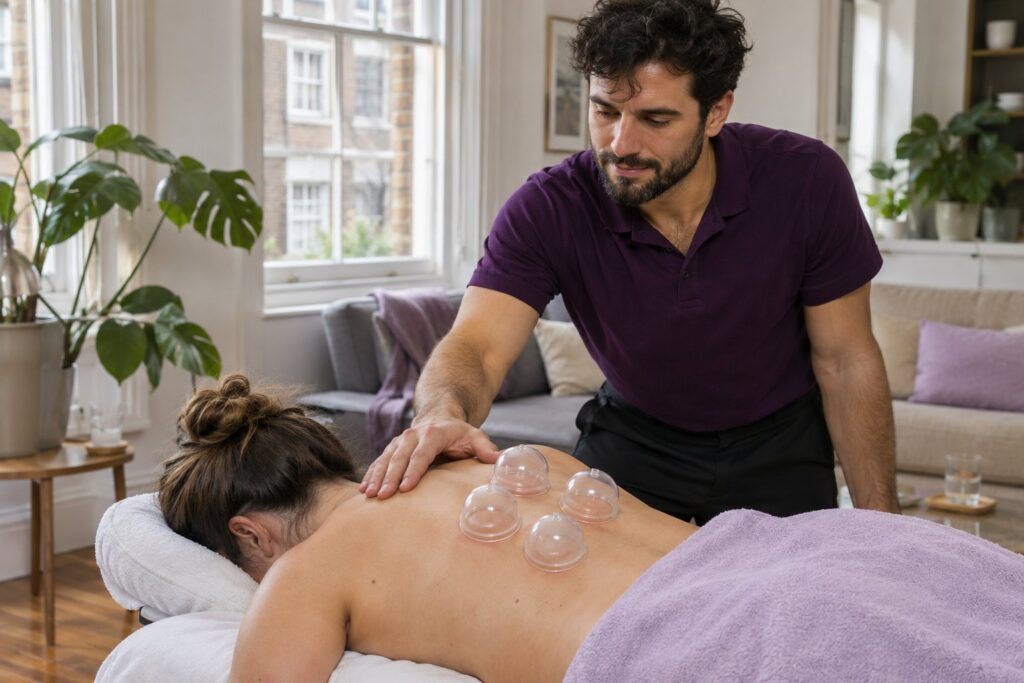
In short: cupping therapy is a treatment in which cups are placed on the skin and held there by suction, so the skin is drawn up into each cup; the dry version used in massage leaves the skin unbroken, but it usually leaves round marks for a while afterwards. What is cupping therapy? It is a practice from traditional medicine in several parts of the world that has found its way into modern massage rooms. Instead of hands pressing down, a cup pulls the skin upwards, which gives a very different sensation from any other massage. If you want to try it at home, book our cupping massage in London and the session comes to you. How does cupping work during a massage? During a cupping massage, your therapist creates suction inside a cup and places it on bare skin, usually on the back or shoulders. The suction holds the cup in place and lifts the skin and the layer beneath it a little way into the cup. Cups are generally used in one of two ways: Static. Each cup is left where it was placed for a short while, and you stay still. Moving. The therapist slides a cup across oiled skin, so it travels like a long, slow stroke. The US government’s National Center for Complementary and Integrative Health (NCCIH) notes that cups can be made of “glass, ceramic, bamboo, or plastic”, and that the suction is made with heat or a suction device. In massage, silicone cups squeezed by hand and cups with a small hand pump are common, because the suction is easy to adjust. A cupping session is often mixed with ordinary hands-on massage, before, between or after the cups. Say at the start whether you want cups for part of the hour or most of it. What does cupping feel like? It is usually described as a tight, pulling feeling, as if the skin is being gently lifted rather than pressed. It is a strange sensation the first time. Suction strength can be adjusted, so say straight away if a cup feels too tight, and it can be eased or moved. Dry cupping and wet cupping: what is the difference? There are two kinds, and they are very different treatments. Dry cupping leaves the skin unbroken. This is the kind used in a cupping massage. Wet cupping, also called hijama, involves piercing the skin. NCCIH puts it plainly: “the skin is pierced, and blood flows into the cup.” It is offered by specialist clinics, not as a massage. Why does cupping leave marks? The cups often leave circular marks behind, anywhere from light pink to deep red or purple. NCCIH says “cupping leaves temporary marks on the skin”. How long they last varies from person to person. Before you book, think about what is coming up in the next week or two: A wedding, a party or photos where your back or shoulders will show. A holiday, a swim or a gym changing room, if you would rather not explain the marks. A medical appointment. NCCIH suggests telling your health care providers about cupping marks, so they are not misread. If one of these is coming up soon, move the cupping to after it, ask for cups only where clothing will cover the marks, or book a cup-free massage for now. Is cupping safe? Dry cupping in a massage leaves the skin unbroken, but it is not for everyone. NCCIH lists possible side effects as “persistent skin discoloration, scars, burns, and infections”, and notes that cupping may worsen eczema or psoriasis. Check before you book: Eczema, psoriasis or broken skin. We cannot book a cupping massage if you have an active skin condition, infection or wound in the area to be treated. Blood thinners, a bleeding disorder or a history of blood clots. Check with your GP first, and book once they are happy for you to have a cupping massage. Recent surgery or an injury in the area: check with your GP first and book once they are happy for you to have a massage. Pregnancy. If you are pregnant, tell us when you enquire and read our pregnancy massage page first. Other reasons to wait or see your GP first are set out in what a mobile massage is. Does cupping actually work? It depends what you mean by work. If you want an unusual, deep-feeling massage with a different sensation from hands alone, cupping gives you that. If you want it to treat pain or a health condition, the evidence is weak. NCCIH says “there’s been some research on cupping, but most of it is of low quality”, and we never sell it as a treatment for a condition. Cupping or another firm massage? If the marks put you off but you like firm work, a deep tissue massage gives you slow, strong pressure with no cups. If you train regularly, read our guide to sports massage vs deep tissue. For everything else on the menu, see massage types compared. How much does cupping cost? A cupping massage is priced like all our massages: £65, £85 or £115 for 60, 90 or 120 minutes during the day, and £95, £120 or £150 at night. Ask for cupping by name when you book, so we can check which therapist is free for your date. Book a cupping massage at home: a 60-minute Jazzy Hora is £65 during the day. Travel is additional: the minimum charge is £15 during the day and £20 at night. The exact travel charge depends on your postcode. Payment is on arrival, with no card needed to book. Send your postcode and preferred time through our online booking page.
Swedish vs Deep Tissue Massage: How to Choose
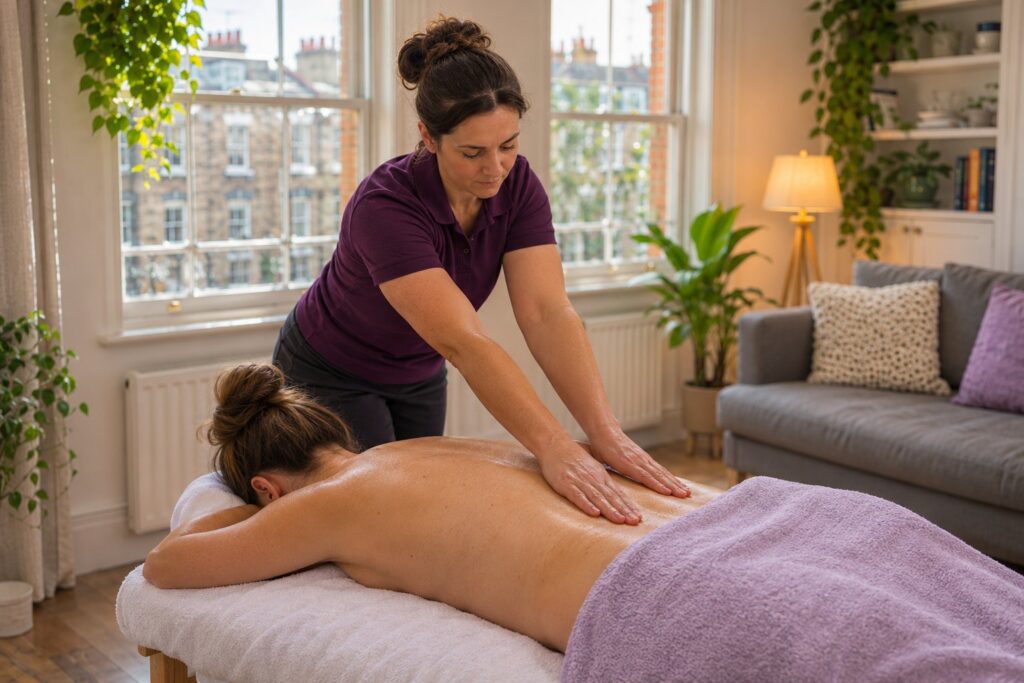
In short: in Swedish vs deep tissue massage, Swedish is the flowing, full-body massage at a pressure you choose, and deep tissue is the slower, firmer one that spends longer on the areas you pick; if you are unsure, start with Swedish or our Purple Classic, which sits between the two. Swedish vs deep tissue massage is usually a question about pressure, but pace and focus matter just as much. One glides across your whole body at an even rhythm; the other slows right down and leans in where you ask. Both are booked the same way, at the same price, and our Swedish massage in London and deep tissue massage both come to your home, hotel or office. How do they feel different on the day? The difference shows early in the session. In a Swedish massage, your therapist spreads the oil with long, smooth strokes across your back, then moves through the body in a steady sequence. The pressure stays even, and the session flows from one area to the next. It is easy to switch off. In a deep tissue massage, the opening strokes are similar, but the pace soon drops. Your therapist uses more body weight, works slowly across one area, and may stay there for several minutes. It asks a little more of you: you will notice the pressure, and you will notice the pressure in some spots. Our guides to what a Swedish massage is and what a deep tissue massage is describe each session step by step. Full body or focused? This is often the deciding question, more than pressure. Choose Swedish if you want your whole body covered in one hour, at an even pace, from shoulders to feet. Choose deep tissue if you want time spent on a few areas, such as your upper back and neck after weeks at a laptop. In a 60-minute deep tissue session, firm work on two or three areas can leave less time for the rest of you. If you want both, book 90 minutes. That leaves time for a full-body massage plus longer, firmer work where you need it. Which one is better for a first massage? Swedish is the easier first choice. You can set the pressure anywhere from light to firm, and you can change it at any point. It is also the easiest to book: every one of our 42 active therapists offers Swedish, while 23 list deep tissue. If you already know you like strong pressure, from a previous massage or from a partner’s heavy hands, you can go straight to deep tissue. And if you are somewhere in between, our Purple Classic mixes deep tissue and relaxation; the team describes it as “not too soft, not too deep”. Can you change your mind halfway through? Yes. The name of the booking does not lock the pressure. If a Swedish massage feels too light, ask for firmer work; if deep tissue is more than you want, ask your therapist to ease off. Say it as soon as you notice, rather than waiting for the next area. The deep tissue guide has a short list of phrases to use for each sensation. Is one better if you have back or neck pain? Neither is a treatment for pain. If your back or neck is stiff from long days at a desk and none of the warning signs apply, choose the pressure you enjoy. If a diagnosed back or neck problem has flared up recently, is worsening, or is under treatment, speak to your GP or physio before booking. For the detail, read when massage suits back pain and neck massage: what is safe. Find your booking in one line If you… Book Have never had a massage Swedish Want to switch off and drift Swedish Want your whole body covered in an hour Swedish Know you like strong pressure Deep tissue Want most of the hour on your shoulders and back Deep tissue Like firm work but not all the way through Purple Classic Exercise regularly and want the session planned around it Read our sports massage vs deep tissue guide Do Swedish and deep tissue cost the same? Yes. Both are £65 for 60 minutes, £85 for 90 minutes and £115 for 120 minutes during the day, and £95, £120 or £150 at night. For how those prices sit against salons and spas, see our guide to UK massage costs. Book a Swedish massage at home, or our deep tissue massage in London if you already know you like it firm: a 60-minute Jazzy Hora is £65 during the day. Travel is additional: the minimum charge is £15 during the day and £20 at night. The exact travel charge depends on your postcode. Payment is on arrival, with no card needed to book. Send your postcode and preferred time through our online booking page.
Sports Massage vs Deep Tissue: Which Should You Book?
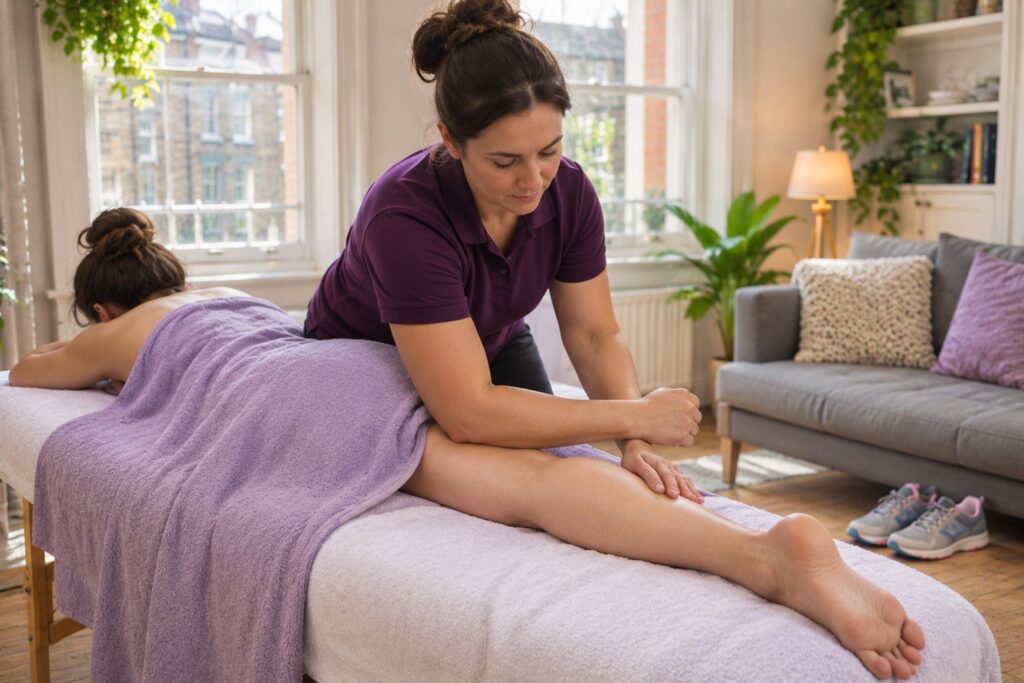
In short: sports massage vs deep tissue comes down to what the session is planned around: a sports massage is planned around your training and your next event, while a deep tissue massage is planned around firm, slow pressure on the areas you choose, whether you exercise or not. Sports massage vs deep tissue is a hard choice because the two can feel alike on the table. Both can be firm, both use oil, and both can stay on one area for a while. The difference is the reason you book. If training is the reason, start with our sports massage in London; if what you want is firm work, deep tissue is usually the better fit. What is the actual difference? Each name answers a different question. “Deep tissue” tells you how the massage is done: slowly, with sustained pressure. “Sports massage” describes what the massage is planned around: your sport, your training load and your next race or match. Sports massage Deep tissue massage Planned around Your training and your next event The areas you want worked and how firm you like it Pressure Varies with your week: firm, or lighter close to an event Builds from lighter to firm and slow Questions at the start What you train, how often, when your next event is Which areas to focus on and which to leave alone Timing In a normal training week, or in the days before or after a race or match Any time that suits you Coverage Usually the areas your sport uses most Whatever you ask for, from one area to the full body Our guides to what a sports massage is and what a deep tissue massage is explain each one on its own. Which should you book? Find your situation You run, cycle, lift or play a sport most weeks. Book a sports massage. Tell your therapist what you train and when your next long run, race or match is, so the session fits around it. You have a race or match in the next few days. Book a sports massage and say how close the event is. Firm, heavy work right before an event is not usually what you want; a sports-focused session can be planned with that in mind. You sit at a desk all day and like firm pressure. Book deep tissue: it is the firmer of our oil massages, planned around the areas you choose. You exercise, but what you really want is strong pressure on your shoulders and back. Either works. Deep tissue gives you a wider choice of therapist: 23 of ours list it, against 7 for sports massage. You have never had a firm massage. Start with our Purple Classic, a mix of deep tissue and relaxation that is “not too soft, not too deep”, and go firmer next time if you want to. Does a sports massage hurt more than deep tissue? Neither should hurt. Both can feel strong in places, and how firm either one feels depends on what you agree with your therapist rather than on the name of the booking. If pressure tips from strong into sharp or painful, say so straight away and it will be changed. Our deep tissue guide has a simple table of what to say during the massage for each sensation. Can you mix the two in one session? Yes, and the two often overlap anyway. A sports massage can include slow, firm deep tissue work on one area, and a deep tissue session can spend extra time on the calves or hamstrings if you have been running. Say what you want at the start: for example, “firm on my back and shoulders, lighter on my legs because I am racing on Sunday”. What to mention about your training when you book A few details are worth including: What you do. The sport or training, or “desk job, no sport”. Any event coming up, and its date. Any injury, past or present. If it is recent or you are being treated for it, check with your GP or physiotherapist first and book once they are happy for you to have a massage. How firm you like it, if you know. A few health situations mean waiting, or getting your GP’s agreement first; see when to hold off on a booking. If you are dealing with back pain in particular, read our guide to massage for back pain before you choose. Sports and deep tissue prices Yes. Sports massage and deep tissue are priced the same as all our massages: £65, £85 or £115 for 60, 90 or 120 minutes during the day, and £95, £120 or £150 at night. Every rate is on our price list. Book a sports massage at home, or our deep tissue massage in London: a 60-minute Jazzy Hora is £65 during the day. Travel is additional: the minimum charge is £15 during the day and £20 at night. The exact travel charge depends on your postcode. Payment is on arrival, with no card needed to book. Send your postcode, your sport and your preferred time through our online booking page.
What Is Reflexology?
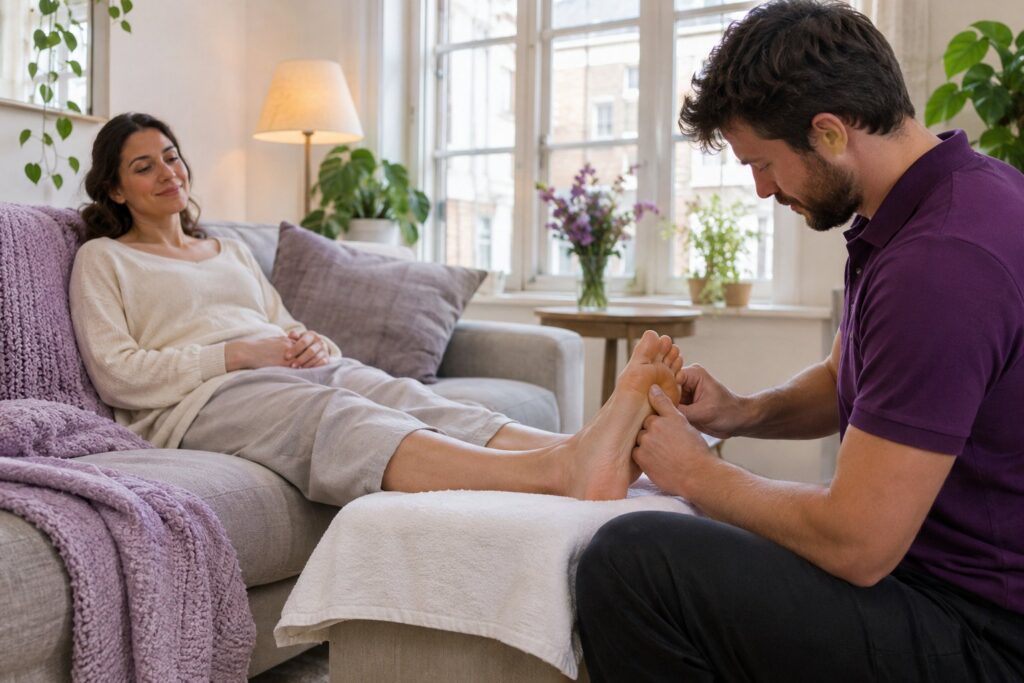
In short: reflexology is a form of foot massage in which the practitioner presses and works specific areas of your feet with their thumbs and fingers, while you stay fully dressed apart from your shoes and socks. What is reflexology? It is a hands-on foot treatment, built on careful thumb and finger pressure, gentle or firm as you prefer, rather than the long strokes of a body massage. You keep your clothes on, sit or lie back with your feet up, and the session is usually quiet and slow. If that sounds like your kind of hour, our mobile reflexology in London brings it to your sofa, your hotel room or your office. How is reflexology different from a foot massage? A foot massage relaxes the whole foot with general rubbing and kneading, while reflexology works small, specific areas one at a time, in a set order. Practitioners often move their thumb in short, inching steps across the sole, sometimes called thumb walking, and pause on particular spots. Reflexology is based on the idea that areas of the feet relate to other parts of the body, and many reflexologists work from foot maps drawn on that idea. That idea is the tradition reflexology comes from, and it is also where the treatment’s bigger claims start. the Victorian Government’s Better Health Channel describes reflexology as “massage of the feet that aims to promote wellness in other areas of the body”, and adds that “reflexologists do not diagnose, prescribe or treat specific conditions”. So the honest way to think of it: reflexology is a focused, relaxing treatment for your feet, not a way to treat anything elsewhere in your body. What happens during a reflexology session? A reflexology session at home is simple to set up, because you only need somewhere comfortable to sit back or lie down with your feet supported. A short chat. Practitioners usually start by asking about your health, any medication, and anything to avoid. The Better Health Channel notes that a reflexologist “first asks detailed questions about your lifestyle, and prior and current medical problems.” Shoes and socks off. That is all you take off. Wear something loose and comfortable, so you can relax with your feet up. The treatment. Your therapist works through each foot in turn, usually from the toes down to the heel. You may feel some spots more than others; the Better Health Channel says reflexology “is not meant to hurt, but should be felt”. Finishing. Many sessions end with gentler strokes over the whole foot. Stay where you are for a few minutes before you stand up. If any area feels too much, say so and your therapist can work more lightly or move on. The way pressure is agreed and changed works the same as in any of our massages; our deep tissue guide explains it in more detail. How long does reflexology take? The Better Health Channel says “a typical session lasts approximately one hour”. With us you can book 60, 90 or 120 minutes. An hour is the usual length for reflexology on its own. Does reflexology work? It depends on what you want from it. If you want a calm, focused hour of foot work, reflexology delivers exactly that. If you are hoping it will treat a health problem, that is not something we can promise, and it is not what we offer. The NHS says complementary therapies “are not tested in the same way as standard medicines to see how well they work”, and advises you to “ask a GP for advice about symptoms that do not go away or keep coming back”. The Better Health Channel is more direct: “Do not stop any medical treatments on the advice of your reflexologist.” When to hold off on reflexology You can usually book reflexology, but a few situations need care. The NHS advises that you “should tell your therapist if you have any medical conditions, are taking any medicines or receiving other treatments”, so mention these when you enquire. For the feet in particular: Skin problems on the feet. We cannot book reflexology if you have an active skin condition, such as an infection or broken skin, on the feet to be treated. A recent foot or ankle injury. Check with your GP first, and book once they are happy for you to have a massage there. Recent surgery, blood thinners or a history of blood clots. Check with your GP first and book once they are happy for you to have reflexology. Pregnancy. If you are pregnant, tell us when you enquire and read our pregnancy massage page first. Wider health situations that stop a booking, or need a doctor’s agreement first, are listed in our mobile massage explainer. Reflexology or another clothed treatment? Reflexology is one of the treatments you can have with your clothes on. Another is an Indian head massage, which works on your head, neck and shoulders while you sit in a chair. Choose reflexology if you want the focus on your feet, and Indian head massage if your shoulders and scalp are where you want the attention. If you would rather have a gentle full-body massage, a Swedish massage (a Swedish massage explained) or the even lighter option described in what lymphatic drainage massage is may suit you better. Every treatment we offer is compared in our guide to types of massage. Five of our therapists currently list reflexology, so booking a week or two ahead gives you more choice of time. How much does reflexology cost? Reflexology is priced the same as our other treatments: £65 for 60 minutes, £85 for 90 minutes and £115 for 120 minutes during the day (8am to 11pm), and £95, £120 or £150 at night. See our London massage prices for the full grid. Book reflexology at home: a 60-minute Jazzy Hora is £65 during the day. Travel is additional: the minimum charge is £15 during the day and £20 at night. The exact
What Is Lymphatic Drainage Massage?
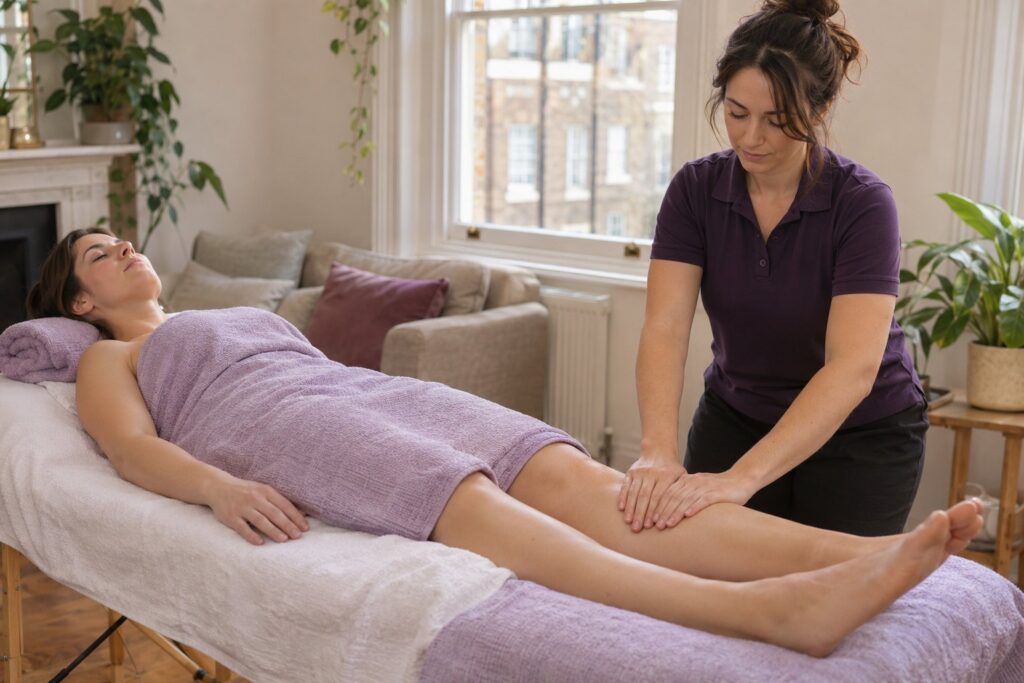
In short: lymphatic drainage massage is a very light, unhurried massage in which the therapist’s hands gently stretch the skin rather than press into the muscle; at home it is a calm, gentle massage, while the medical version used for lymphoedema is a specialist NHS treatment. What is lymphatic drainage massage? It is the lightest kind of massage you can book. Instead of kneading or deep strokes, your therapist uses flat hands and soft, repeated movements, so the session feels quiet and unhurried from start to finish. If that is the kind of hour you want, book a lymphatic drainage massage in London and a therapist will come to you, wherever you are inside the M25. How does a lymphatic drainage massage feel? It feels much lighter than any other massage you are likely to have had. The movements are slow, gentle and repeated, and it can feel as if the skin is being softly stretched in one direction and then released, again and again. Expect it to feel: Light. There is no firm pressure on the muscle. If you have only ever had deep tissue, it may feel almost too gentle at first. Repetitive. The same small movement is usually repeated several times on one area before the hands move on. Slow. The pace stays even all the way through, with no brisk tapping or quick strokes. Because it is so light, it is easy to drift off. If you want any area left out, or you would like the session to start somewhere in particular, say so at the start. What is manual lymphatic drainage, and is it the same thing? Manual lymphatic drainage (MLD) is the medical name for the specialist technique used to treat lymphoedema, and it is not the same as booking a lymphatic drainage massage at home. The NHS describes lymphoedema as “a long-term (chronic) condition that causes swelling in the body’s tissues”, and its lymphoedema treatment page lists MLD as part of decongestive lymphatic therapy, “usually carried out by a specialist therapist”. Put plainly: If you have lymphoedema, or swelling in your arms or legs that you have not had checked, start with your GP. The NHS says to “see a GP if you experience the typical symptoms of lymphoedema, such as swelling in your arms and legs”, and they may refer you to a specialist lymphoedema centre. If you want a gentle, relaxing massage and none of that applies, a lymphatic drainage massage at home is a good fit. It is a wellness massage, not a treatment for any condition. Who should check with a doctor before booking? Some people should talk to a GP first, and a handful of situations mean we cannot book you at all. You will find them listed, along with recent surgery and blood thinners, in our explainer on what mobile massage involves. For lymphatic drainage in particular, check these first: Swelling in one leg. The NHS lists “swelling in 1 leg (rarely both legs)” and “throbbing pain in 1 leg”, usually in the calf or thigh, as symptoms of a deep vein thrombosis (DVT). Ask for an urgent GP appointment or contact NHS 111 if you think you may have one; call 999 if you also feel short of breath or have chest pain. Do not book a massage until a doctor has checked the swelling. We cannot book a massage for anyone with a diagnosed DVT. After an operation. If you are looking at lymphatic drainage after surgery, including cosmetic surgery, check with your surgeon or GP first and book once they are happy for you to have a massage. Heart, kidney or clotting history, or cancer treatment. If you have a heart or kidney condition, an active infection, a history of blood clots, or are having treatment for cancer, check with your GP first and book once they are happy for you to have a massage. Pregnancy. If you are pregnant, tell us when you enquire and read our pregnancy massage page first. Is lymphatic drainage massage a weight-loss or water-retention treatment? A lymphatic drainage massage is not a weight-loss treatment, and it is not a treatment for water retention. The NHS describes MLD as one part of a specialist treatment for lymphoedema. Our lymphatic drainage massage is a relaxing wellness massage, and we do not offer it for weight loss or fluid retention. “Detox” is often mentioned in the same breath. Writing about detox diets, the British Dietetic Association points out that your skin, gut, liver and kidneys “continually ‘detoxify’ your body” on their own. Our guide to what toxins are released after a massage looks at that claim in more detail. So book a lymphatic drainage massage because you like gentle, slow work and want an hour to rest, not because you expect a change on the scales. What happens in a lymphatic drainage massage at home? A session at home follows the same pattern as any of our mobile massages, just at a gentler pace. Before your therapist arrives. Clear a little floor space, have a couple of clean towels ready and somewhere to wash hands. Our guide on how to prepare for a mobile massage covers the rest. A short conversation. Therapists usually ask why you have booked, how you are feeling and whether there is anywhere to avoid. Mention any surgery, swelling or medication here. The massage. You decide together where to start and which areas to include. Lymphatic drainage is often started with you lying on your back, and the work stays light throughout. Afterwards. Take a few minutes before you get up. You are already at home, so there is nowhere to rush to. You can book 60, 90 or 120 minutes. An hour is a good length for a first session; a longer booking gives more time at the same slow pace. Lymphatic drainage or Swedish massage: which should you book? Book lymphatic drainage if you want the lightest possible touch and a very slow,
Massage for Back Pain: When to Book, When to See a GP
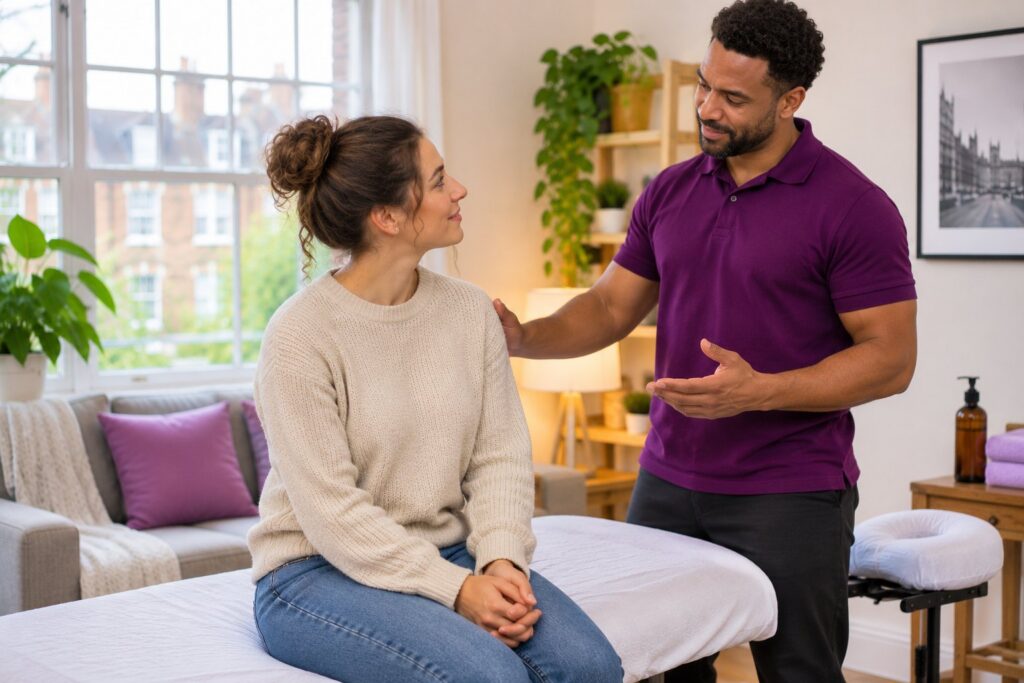
In short: massage is not a treatment for back pain, but you can book one for a desk-stiff back if no NHS warning sign applies; if a diagnosed condition is new, worsening, flaring or being treated, check with a GP or physiotherapist first. Massage for back pain appears in NHS and NICE guidance only as one part of treatment. The NICE guideline on low back pain and sciatica says to consider manual therapy, including “soft tissue techniques such as massage”, “but only as part of a treatment package that includes exercise”. A massage at home is not that package. It can still be a reasonable booking when your back feels tight in a way you recognise and nothing below points to a doctor. If your back has stiffened up over weeks at a desk and you like firm work, a deep tissue massage in London may suit you; check the three situations below first. What do the NHS and NICE say about massage for back pain? Both mention massage, and both mention it as part of treatment. The NHS back pain page says back pain “usually improves within a few weeks but can sometimes last longer or keep coming back”. Its self-care advice starts with staying active and carrying on with your daily activities, plus: anti-inflammatory painkillers like ibuprofen, which may not suit everyone (paracetamol on its own is not recommended for back pain) checking with a pharmacist or GP if you are unsure which painkiller is right for you an ice pack, or a heat pack or hot water bottle, wrapped in a tea towel exercises and stretches for back pain, stopping and seeing a GP if the pain gets worse not staying in bed for long periods If a few weeks pass without the pain getting better, the NHS says other treatments may be recommended. These include group exercise sessions and physiotherapy, cognitive behavioural therapy, and manual therapy: “where a trained therapist massages and moves the muscles, bones and joints in your back”. A booked massage at home is not physiotherapy or manual therapy in that sense, and it is not a treatment for back pain. How a massage feels on a stiff back is a separate, personal question. Which massage booking suits your back? Book the pressure you like if your back is stiff from desk work and no warning sign applies; check with your GP or physiotherapist first if a diagnosed condition is new, getting worse or flaring, or you are having treatment for it; wait if the pain is severe or getting worse quickly. Your back What comes first Booking Stiff or achy after long days at a desk, a pattern you know, none of the warning signs below Nothing extra Book the pressure you like A diagnosed back or disc condition, such as a slipped disc, sciatica or spinal stenosis If it is new, getting worse or flaring, or you are having treatment for it, check with your GP or physiotherapist first Otherwise book, lighter on the sore area Severe, getting worse quickly, or any NHS warning sign Your GP, NHS 111 or 999, as listed below Wait Separately from your back, a few general health situations rule a massage out or need your GP to agree first; you will find them in our mobile massage guide. A stiff back after long days at a desk If your back feels tight after hours in a chair, the feeling is familiar and none of the warning signs apply, you can book a massage because you want one. Go in expecting a massage, not a fix. Keep up the movement the NHS suggests alongside it: its back pain page says walking, swimming, yoga and pilates “may also help ease back pain”. Choose the pressure by what you enjoy. If you are not sure how firm to go, our deep tissue massage guide explains how pressure is agreed and changed during a session. A diagnosed back condition If you have a diagnosed back or disc condition, check with your GP or physiotherapist before booking if the pain is new, getting worse or flaring, or if you are having treatment for it. Otherwise you can book, with lighter pressure on the sore area. The NHS lists a slipped disc, sciatica and ankylosing spondylitis among the medical conditions that can cause back pain. A slipped disc is also the most common cause of sciatica, according to the NHS. Disc questions, including what to avoid in a session, are covered in our guide on whether massage can make a herniated disc worse. If you are already seeing a physio, a massage at home sits outside that plan rather than inside it. Tell your physio you are thinking of booking one. New, severe or worsening pain Severe pain that starts suddenly, or pain that is getting worse quickly, is a reason the NHS gives to get an urgent GP appointment or help from NHS 111. Sort that out before thinking about a booking. If the pain is new but milder, the NHS notes that back pain often gets better on its own, and says to see a GP if it does not improve after treating it at home for a few weeks. Which back pain signs mean a GP, 111 or 999 first? If any of the signs below applies to you, get medical help and leave the massage for later. Call 999 or go to A&E. The NHS back pain page lists back pain with: pain, tingling, weakness or numbness in both legs a loss of feeling around your genitals or anus changes in your bladder or bowels, such as difficulty peeing, or peeing or pooing yourself changes in how your penis or vagina feels during sex, not being able to get or keep an erection, or not being able to orgasm chest pain pain that started after a serious accident, such as a car accident For sciatica, the NHS sciatica page also lists sciatica on both sides, severe
What Is a Sports Massage?
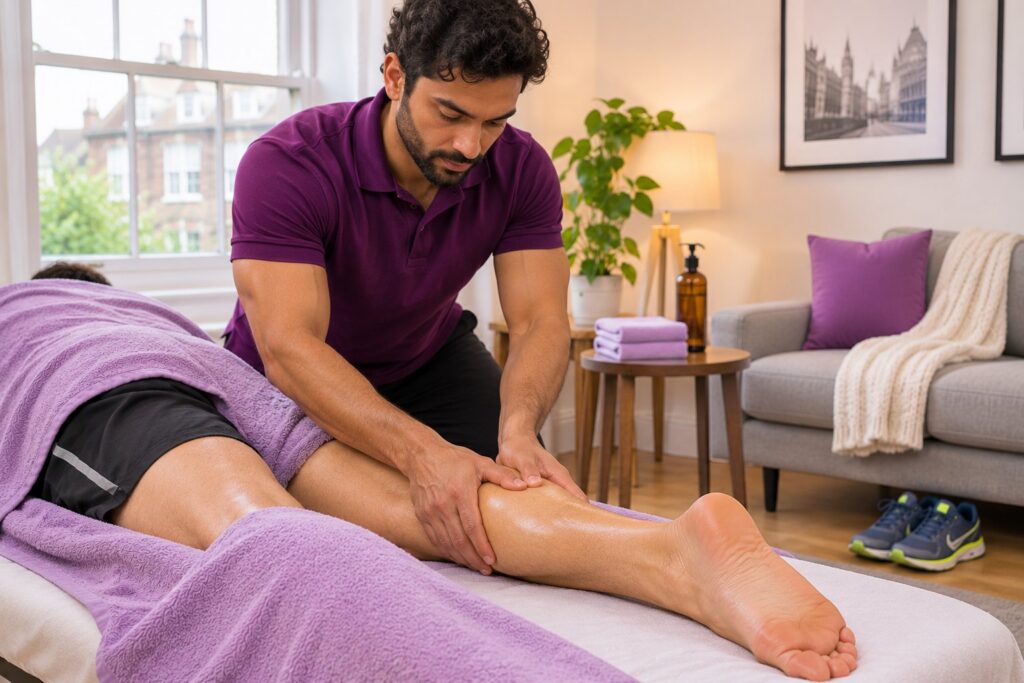
In short: a sports massage is a firm, focused massage built around the exercise you do, with most of the session spent on the muscles your sport or training works hardest. What is a sports massage? It is hands-on work on your muscles and the soft tissue around them, using many of the strokes found in other oil massages, but shaped by your activity: your therapist asks what you do and what is coming up, then spends the time on the parts of you that running, lifting, cycling or a weekly match load the most. You do not need to compete to book one. Our sports massage in London comes to your door anywhere inside the M25, and to a hotel room or your workplace too, so you can have it on your sofa the evening after a long run. What does a sports massage involve? A sports massage involves a short conversation about your training, then focused work on the muscles your training uses most, rather than an even pass over the whole body. The techniques are a small, familiar set: Long, gliding strokes, with the hands sliding over the skin (effleurage). These usually open the work on each area and link one area to the next. Kneading (petrissage), where the muscle is lifted, squeezed and moved, then let go. Frictions: small, firm movements back and forth over one spot, using the pads of the fingers or thumbs. Hacking, where the edges of the hands strike the muscle in a light, quick, springy rhythm. What makes it a sports massage is where and how long those strokes are used. If you run, it is common for the time to go on your calves, hamstrings and hips. If you swim or climb, the focus moves up to your shoulders and the muscles around your shoulder blades. Firm work on a busy muscle can feel uncomfortable for a moment, but it should not be very painful. The pressure is yours to set, and you can change it at any point: for how that conversation works, see our page on agreeing pressure with your therapist. For clothing and towels, our guide covers what to wear for a massage at home. Pre-event, post-event and maintenance: what is the difference? They are session formats named after when they happen relative to your training or your event. The UK occupational standard for sports massage therapists lists pre-event, inter-event, post-event and maintenance work as distinct kinds of session. Session When it usually happens What it is like Pre-event On the day of the event, shortly before your warm-up Short and brisk; it comes before your warm-up and does not stand in for it Inter-event Between heats, rounds or matches on the same day Brief, fitted into the gap Post-event Straight after the event, once you have cooled down Short, often 10 to 15 minutes, given at or near the venue Maintenance Between training sessions, in an ordinary week A booked session on the areas your training uses most Pre-event and post-event work happens on the day, at or near the event. A home visit fits the maintenance format: an hour or more in a normal training week, or a session in the days after a race or match. If you are building up to the London Marathon or your first 10K, tell your therapist when your next long run or race is, so the session can be planned with it in mind. Does sports massage help recovery? The research on massage and sport is limited and mixed. A sports massage is not a treatment for injury, so book one because you like how it feels and it fits your training week. If you have hurt yourself, or something hurts every time you train, see a GP or a physiotherapist; for a fresh sprain or strain, the NHS advice is further down this page. What will your therapist ask about your training? Expect questions about what you do, how often, what is coming up and your health. These questions are standard: the UK occupational standard asks sports massage therapists to assess your general health and the issues linked to your activity, and to take your medical history, before they start. Typical questions: What sport or training you do, and how many times a week. Whether a race, match or heavy session is due in the next few days. Where you feel tight or sore, and whether it is one side or both. Any injury, operation or health condition, past or present, and any medication you take. How firm you like the pressure. A one-line answer does the job: “I run three times a week, my left calf always feels tight, and I have a half marathon in a fortnight.” Give it even if you are not asked. How does sports massage differ from deep tissue? Deep tissue describes how the work is done, slow and firm; sports massage describes what it is planned around, your training. To choose between them for your week, read sports massage vs deep tissue. Do you need to be an athlete to have a sports massage? No. Sports massage suits anyone who exercises regularly, at any level. In London that takes in runners on the Thames Path or in Regent’s Park, cyclists who ride to work, gym regulars, and anyone with a five-a-side or netball game in the diary. If you train twice a week and want the session to centre on the muscles that training uses, sports massage is the right booking. If you hardly exercise and mainly want firm pressure on a stiff back and shoulders, a deep tissue session or our Purple Classic may suit you better, and our guide to the different types of massage compares them. If back pain is why you are booking, read massage for back pain first. Which injuries and health details should you mention first? Tell your therapist about any injury, new or old, and anything that has felt different since you