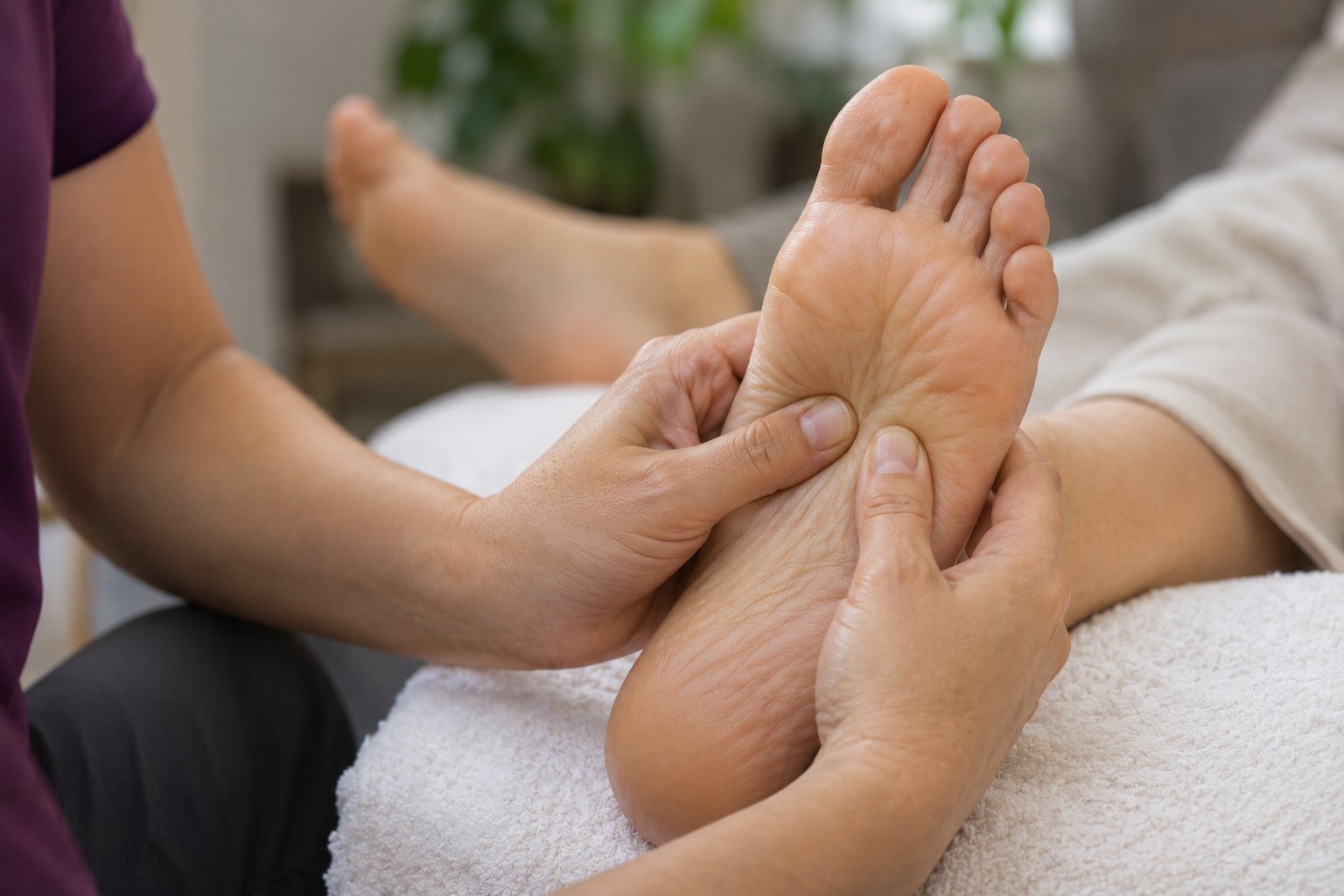
In short: reflexology is a form of foot massage in which the practitioner presses and works specific areas of your feet with their thumbs and fingers, while you stay fully dressed apart from your shoes and socks.
What is reflexology? It is a hands-on foot treatment, built on careful thumb and finger pressure, gentle or firm as you prefer, rather than the long strokes of a body massage. You keep your clothes on, sit or lie back with your feet up, and the session is usually quiet and slow. If that sounds like your kind of hour, our mobile reflexology in London brings it to your sofa, your hotel room or your office.
How is reflexology different from a foot massage?
A foot massage relaxes the whole foot with general rubbing and kneading, while reflexology works small, specific areas one at a time, in a set order. Practitioners often move their thumb in short, inching steps across the sole, sometimes called thumb walking, and pause on particular spots.
Reflexology is based on the idea that areas of the feet relate to other parts of the body, and many reflexologists work from foot maps drawn on that idea. That idea is the tradition reflexology comes from, and it is also where the treatment’s bigger claims start. the Victorian Government’s Better Health Channel describes reflexology as “massage of the feet that aims to promote wellness in other areas of the body”, and adds that “reflexologists do not diagnose, prescribe or treat specific conditions”.
So the honest way to think of it: reflexology is a focused, relaxing treatment for your feet, not a way to treat anything elsewhere in your body.
What happens during a reflexology session?
A reflexology session at home is simple to set up, because you only need somewhere comfortable to sit back or lie down with your feet supported.
- A short chat. Practitioners usually start by asking about your health, any medication, and anything to avoid. The Better Health Channel notes that a reflexologist “first asks detailed questions about your lifestyle, and prior and current medical problems.”
- Shoes and socks off. That is all you take off. Wear something loose and comfortable, so you can relax with your feet up.
- The treatment. Your therapist works through each foot in turn, usually from the toes down to the heel. You may feel some spots more than others; the Better Health Channel says reflexology “is not meant to hurt, but should be felt”.
- Finishing. Many sessions end with gentler strokes over the whole foot. Stay where you are for a few minutes before you stand up.
If any area feels too much, say so and your therapist can work more lightly or move on. The way pressure is agreed and changed works the same as in any of our massages; our deep tissue guide explains it in more detail.
How long does reflexology take?
The Better Health Channel says “a typical session lasts approximately one hour”. With us you can book 60, 90 or 120 minutes. An hour is the usual length for reflexology on its own.
Does reflexology work?
It depends on what you want from it. If you want a calm, focused hour of foot work, reflexology delivers exactly that. If you are hoping it will treat a health problem, that is not something we can promise, and it is not what we offer.
The NHS says complementary therapies “are not tested in the same way as standard medicines to see how well they work”, and advises you to “ask a GP for advice about symptoms that do not go away or keep coming back”. The Better Health Channel is more direct: “Do not stop any medical treatments on the advice of your reflexologist.”
When to hold off on reflexology
You can usually book reflexology, but a few situations need care. The NHS advises that you “should tell your therapist if you have any medical conditions, are taking any medicines or receiving other treatments”, so mention these when you enquire.
For the feet in particular:
- Skin problems on the feet. We cannot book reflexology if you have an active skin condition, such as an infection or broken skin, on the feet to be treated.
- A recent foot or ankle injury. Check with your GP first, and book once they are happy for you to have a massage there.
- Recent surgery, blood thinners or a history of blood clots. Check with your GP first and book once they are happy for you to have reflexology.
- Pregnancy. If you are pregnant, tell us when you enquire and read our pregnancy massage page first.
Wider health situations that stop a booking, or need a doctor’s agreement first, are listed in our mobile massage explainer.
Reflexology or another clothed treatment?
Reflexology is one of the treatments you can have with your clothes on. Another is an Indian head massage, which works on your head, neck and shoulders while you sit in a chair. Choose reflexology if you want the focus on your feet, and Indian head massage if your shoulders and scalp are where you want the attention.
If you would rather have a gentle full-body massage, a Swedish massage (a Swedish massage explained) or the even lighter option described in what lymphatic drainage massage is may suit you better. Every treatment we offer is compared in our guide to types of massage.
Five of our therapists currently list reflexology, so booking a week or two ahead gives you more choice of time.
How much does reflexology cost?
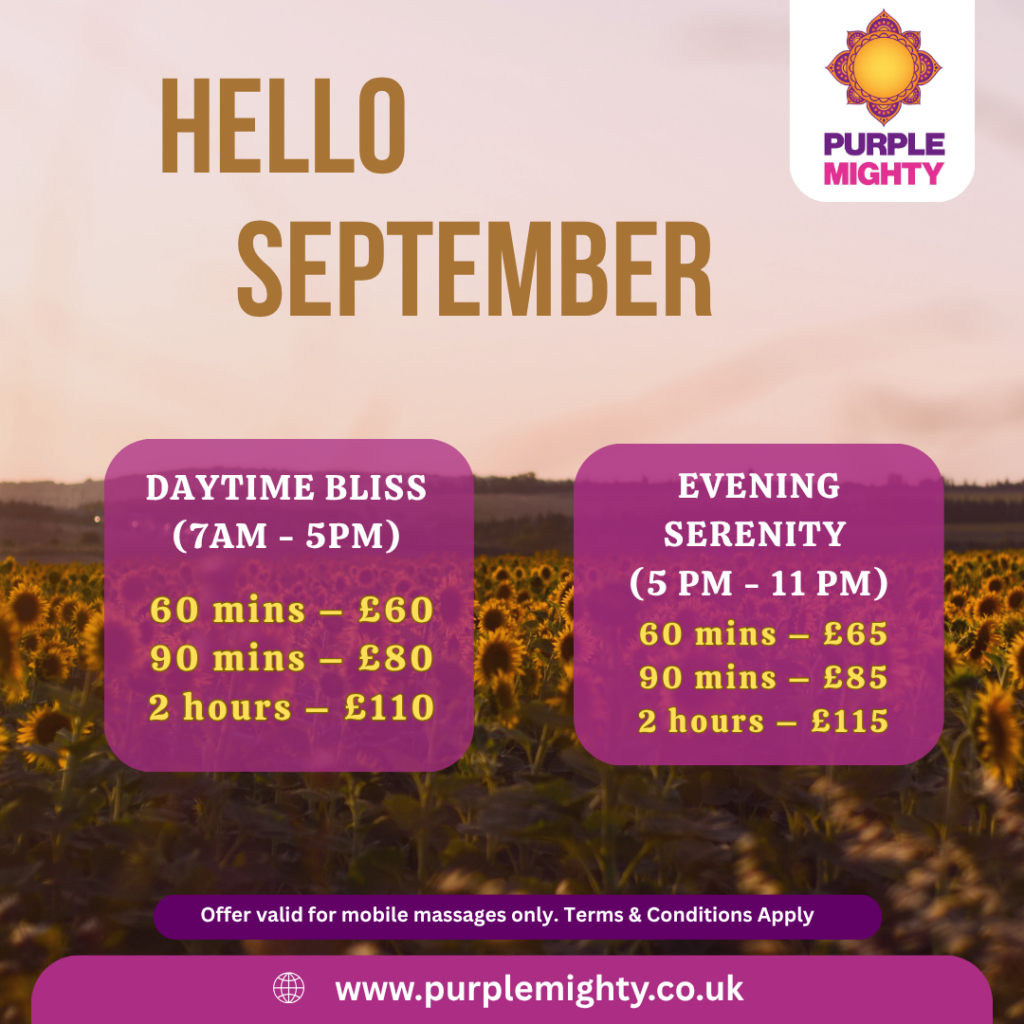
Reflexology is priced the same as our other treatments: £65 for 60 minutes, £85 for 90 minutes and £115 for 120 minutes during the day (8am to 11pm), and £95, £120 or £150 at night. See our London massage prices for the full grid.
Book reflexology at home: a 60-minute Jazzy Hora is £65 during the day. Travel is additional: the minimum charge is £15 during the day and £20 at night. The exact travel charge depends on your postcode. Payment is on arrival, with no card needed to book. Send your postcode and preferred time through our online booking page.