What Is a Deep Tissue Massage?
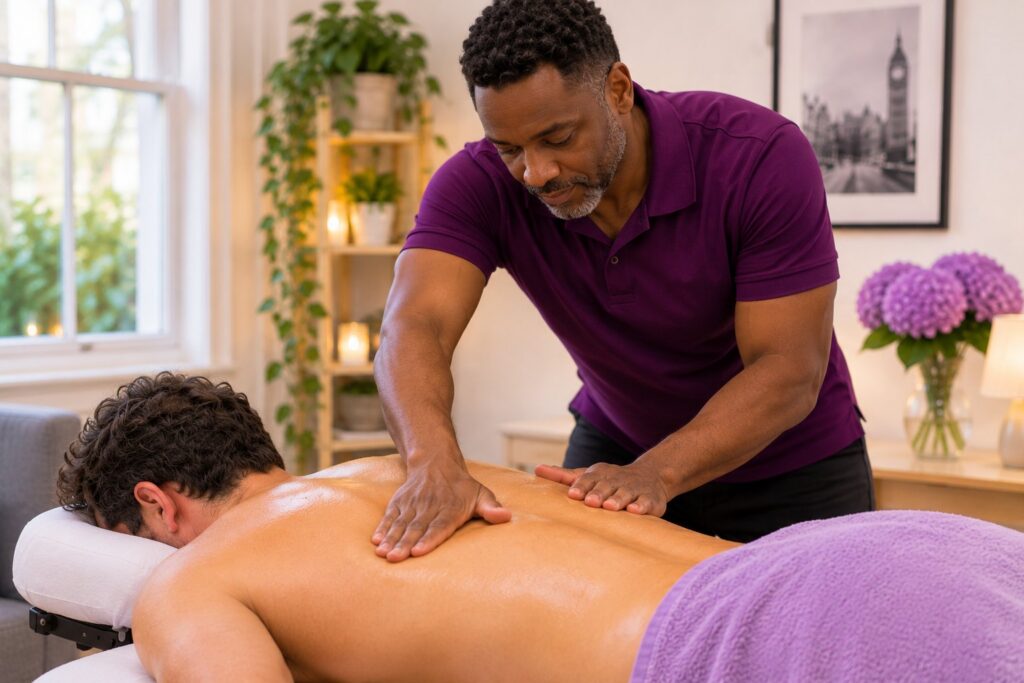
In short: a deep tissue massage is a slow, firm massage focused on the areas you choose, at a pressure you set with your therapist and can change at any point. What is a deep tissue massage? It is a massage done slowly, with firm, sustained pressure, where the time goes on the parts of you that you want worked on. Many of the strokes are the ones a Swedish massage uses, such as kneading and long strokes, but your therapist applies them more slowly and with more force. The session can cover your whole body or stay on one area, such as your back and shoulders. If you would like one without travelling, our deep tissue massage in London sends a therapist to you anywhere inside the M25, whether that is your flat, your hotel room or your office. What happens in a deep tissue session? A deep tissue session starts lighter and builds to firm work on the areas you picked. Therapists vary, but a session often runs like this. A short talk first. Therapists normally ask which areas you want worked on, which to leave alone and how firm you like it. Mention any injury, sore spot or area to avoid here. Some health conditions rule a massage out, and others need your GP’s go-ahead before booking: see the checks before you book a home massage. A lighter start. The first few minutes use a lighter touch, with broad strokes over the area, before the pressure builds. Slower, firmer work. The strokes slow down and the pressure goes in further: deep kneading and long, slow strokes, with more time on the spots you named. Expect the pressure to vary as your therapist moves from one area to the next. Check-ins along the way. Therapists usually ask how the pressure feels once the firm work starts. That is your moment to adjust it. If you choose a single area, the whole hour can go there. Should a deep tissue massage hurt? No. Medical News Today describes deep tissue as slightly uncomfortable at times, especially on a tight spot, but says it should not be painful. The difference is easier to feel than to define. Discomfort is a strong, dull pressure you can stay relaxed under, even if you are glad when it moves on. Pain is sharp, stabbing or burning, or it makes you flinch, pull away or brace against your therapist’s hands. Your therapist cannot tell which one you are feeling. A massage therapist quoted by Cleveland Clinic puts it plainly: therapists “cannot feel the intensity of your pain response”. So say something the moment it tips from strong into painful. If you want the massage to stop, for a few seconds or for good, say “stop”. You do not need to give a reason. What you feel What to say Firm and slow, and you can breathe and stay loose “That’s good, stay there” You are bracing, curling your toes or pulling away “A bit lighter, please” The pressure slides over a spot you wanted worked “Firmer there, please” Sharp, stabbing or burning, or it makes you flinch “Stop” A spot is tender and you would rather leave it “Can you skip that bit?” How do you agree the pressure, and change it mid-session? You set a starting pressure before the massage, test it in the first few minutes of firm work, and change it as often as you like after that. Before the massage. Tell your therapist where you want the work and where to go easy. “Firm” means different things to different people, so if you have had a deep tissue massage before, describe how it compared with what you wanted. If a number is easier, a rough score out of ten works, with ten as the most you could take. Start firm or build up. Say which you prefer. Building up gives you a few minutes to find your level; starting firm suits you if you already know it. The first firm pass. Once the pressure has built, give an honest answer when your therapist checks. If they have not asked, tell them anyway. This is the easiest point to adjust, before you have spent twenty minutes at the wrong level. Spot by spot. The pressure does not have to be the same everywhere. Firm across the shoulder blades, gentle on the calves and nothing at all on the neck is a fair request. Any time after that. Change your mind as often as you need, including on a spot you already said was fine. Short words work best: firmer, lighter, slower, stay there, skip that. When talking is awkward. Lying face down, a sentence can be hard. Agree a simple signal at the start, such as raising a hand for “lighter”. Next time. Remember what worked, so you can tell your therapist in one line. If one therapist gets your pressure right, ask for the same therapist next time, subject to availability. Is deep tissue massage the same as soft tissue massage? No, but they are not opposites either. “Soft tissue” names the parts of the body being worked on, not a gentle pressure. The Sports Massage Association uses the term soft tissue therapy, rather than soft tissue massage, for hands-on work on the body’s soft tissues, which it lists as primarily muscles, tendons and ligaments. Cleveland Clinic counts both deep tissue and Swedish massage as forms of soft tissue manipulation. So deep tissue is one kind of soft tissue work, not its firmer rival. The phrase turns up in sport. Sport Wales, for example, has soft tissue therapists working with its athletes. Soft tissue massage is not a separate item on our treatment list. If a clinic or gym has offered you “soft tissue massage”, ask them what pressure and techniques they mean, then compare it with the options below. How is deep tissue different from Swedish and sports massage? Deep tissue is slower and firmer than Swedish, and less
What Is a Swedish Massage?
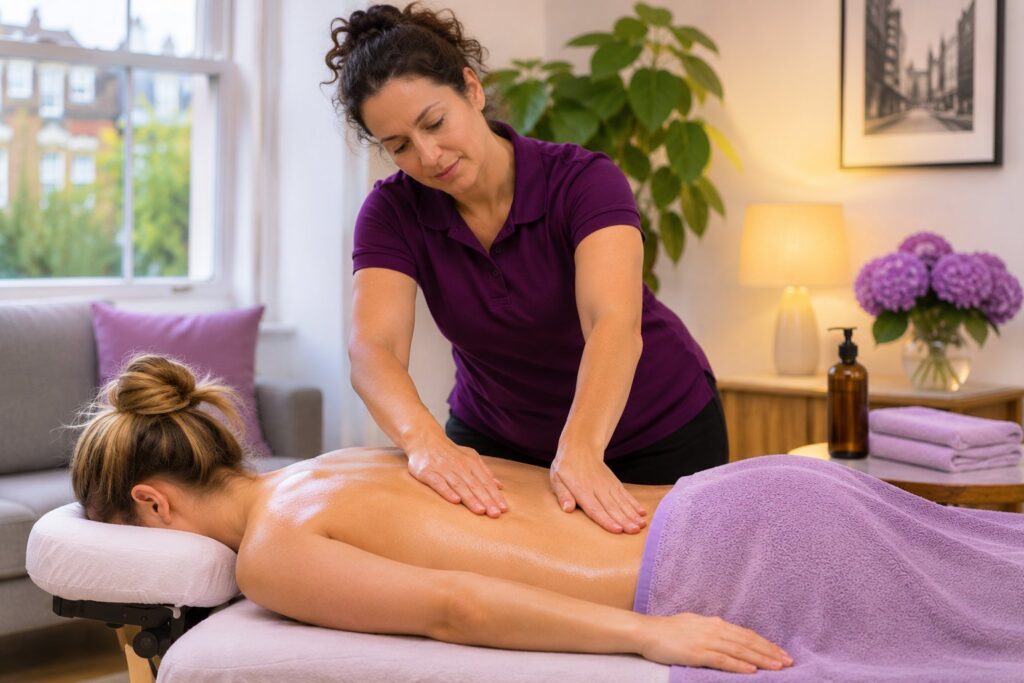
In short: a Swedish massage is a full-body oil massage made of long, gliding strokes and slow kneading, done at a steady pace and at a pressure you agree with your therapist before they begin. What is a Swedish massage? It is the long-established oil massage whose strokes form the basis of many other styles: your therapist works from your shoulders and back down to your feet with five basic strokes, from long, smooth glides to kneading and light tapping, while a towel keeps the rest of you covered. The pressure can be light or firm, and you choose it. If you would like one without leaving home, our Swedish massage in London comes to your home, hotel or office anywhere inside the M25. What happens during a Swedish massage at home? A Swedish massage at home follows much the same order as one in a clinic, except the room is yours. Some health situations mean we cannot book you in, or that your GP should agree first; our guide to what a mobile massage is lists them, along with how booking works and what to have ready at home. Arrival and set-up. Your therapist brings the oil (tell us about a nut allergy: one of the oils is almond); a table comes on request. A short conversation. Before starting, therapists usually ask what you would like from the hour, which areas to spend time on or leave alone, how firm you like it, and about your health. This is the moment to mention an injury, recent surgery or medication. Getting ready. It is standard for your therapist to step out or turn away while you undress. You then lie face down under a towel. The massage. A full-body Swedish massage typically begins with your back and shoulders, then the backs of your legs. You turn over, with the towel usually held in place for you, for the fronts of the legs, the arms, and finally the neck and shoulders. If you would like a different order, or more time on one area, say so at the start. Finishing. Sessions usually close with slow, gliding strokes. Take your time getting up and dressed afterwards; therapists usually pack away in the meantime, and you are already home. What are the main strokes in a Swedish massage? Swedish massage is built on five basic strokes. You do not need to know their names to enjoy it, but they help if you want to ask for more of one thing or less of another. Stroke What your therapist does What it feels like Effleurage Long, gliding strokes with flat palms along the back, arms and legs Smooth and warm. It opens the massage, spreads the oil and links one area to the next Petrissage Kneading: lifting, squeezing and rolling the muscle between the hands and thumbs Slower and deeper than gliding, a bit like dough being worked. Can feel firm on the shoulders and calves Friction Small, firm circles or short back-and-forth strokes with the thumbs or fingertips on one spot The most focused of the five. It can feel strong for a few seconds, so say if it is too much Tapotement Quick, light tapping with the fingertips, the edges of the hands or cupped palms Brisk and rhythmic, like a soft drumbeat. Usually brief, and easy to leave out if you would rather Vibration The hand rests on one area and shakes quickly and lightly A gentle trembling or buzzing, used for short spells In a Swedish massage, gliding and kneading carry the session, and the other three come in here and there. What makes it feel Swedish is the flow: one stroke runs into the next without sharp stops. How firm is a Swedish massage? A Swedish massage can be anywhere from light to firm, and the pressure is set by you. The style is defined by its long, flowing rhythm rather than by force, so a firm Swedish massage still moves steadily across the whole body instead of staying slowly on one spot. Pressure is agreed in three ways: Before you start. Therapists usually ask how firm you like it. If you are not sure, a number out of ten is the easiest answer, where one is barely there and ten is more than you want. In the first few minutes. It is common for a therapist to check in once they have begun on your back, which is the best moment to say “a bit firmer” or “lighter, please”. Area by area. You can have different pressure in different places, for example firmer across the shoulders and lighter on the legs or neck. Firm pressure can feel strong, but it should not feel sharp or make you hold your breath. If it does, say so and ask your therapist to ease off. What do you wear for a Swedish massage? You undress to the level you are comfortable with, and a towel covers the areas not being massaged. Whether you keep your underwear on is your choice. Therapists usually uncover one area at a time, for example one leg, then cover it again before moving on. Swedish massage uses oil so the hands can glide, and it leaves a light film on your skin afterwards. Have something loose and comfortable to put on, and shower whenever suits you. For every treatment, including the ones you can have fully dressed, see what to wear for a massage at home. Swedish or deep tissue: which is gentler? Swedish is the gentler of the two: it usually covers the whole body at a pressure you choose, while deep tissue works more slowly and firmly on fewer areas. Our guide to choosing between Swedish and deep tissue compares them side by side. There is a practical reason to start with Swedish too. Every one of our 42 active therapists offers Swedish, against 23 who list deep tissue, so Swedish gives you the widest choice of therapist. If you already know you
Types of Massage: Which One Should You Book?
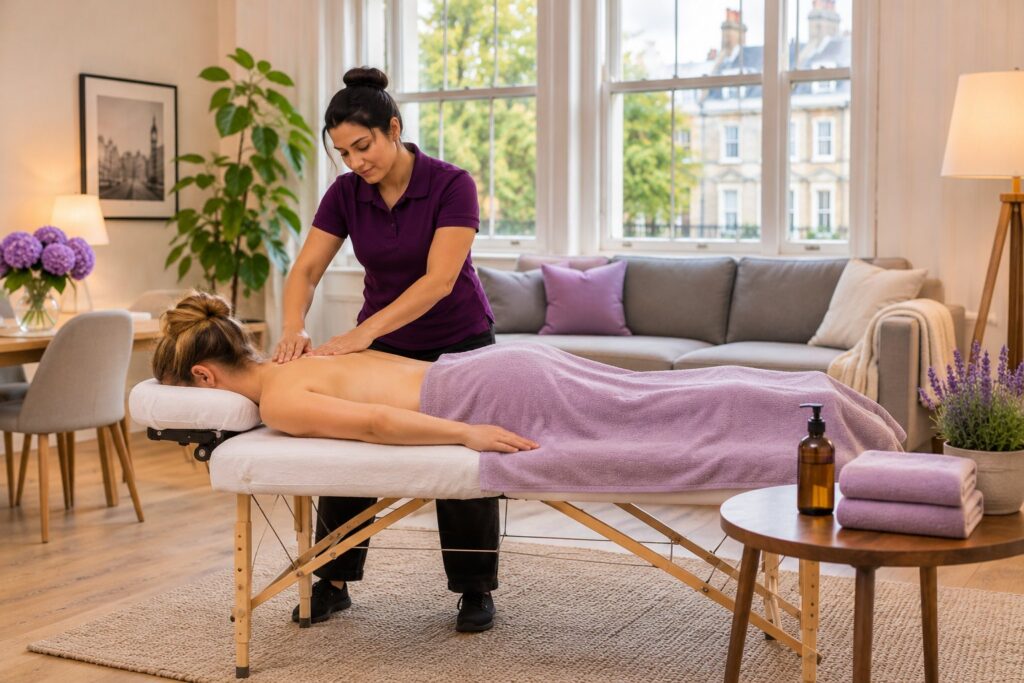
In short: the main types of massage differ in how firm the pressure is, whether oil is used and what you wear, and if you are unsure, a 60-minute Swedish massage or our Purple Classic is the easiest place to start. Types of massage are easiest to tell apart by three things: the pressure, the oil and how dressed you stay. Swedish, deep tissue and Purple Classic are oil massages under a towel at three different firmness levels. Thai, reflexology and Indian head massage can all be done with your clothes on. Hot stone, cupping and aromatherapy add something to the hands: warmth, suction or scent. If you would rather see them as bookings, with prices, start with the massage treatments we bring to your home in London. What are the main types of massage? The main types of massage in the UK are Swedish, deep tissue, sports, Thai, aromatherapy, reflexology, lymphatic drainage, Indian head, hot stone, cupping and pregnancy massage. Cancer Research UK describes Swedish as the most common type of full body massage. Its long strokes and kneading turn up in several of the others. We also offer our own Purple Classic, which sits between Swedish and deep tissue. Swedish massage Long, gliding strokes and slow kneading with oil, worked over the whole body at a steady pace. You set the pressure, from soft to fairly firm, and it can change from one area to the next. You undress as far as you like and lie under a towel. It suits you if this is your first massage or you want something unhurried and even. Every therapist on our team offers Swedish massage at home in London, and our Swedish massage guide takes you through it stroke by stroke. Deep tissue massage Slower strokes and deep finger pressure on the areas you choose, with more weight behind them than in a Swedish massage. It uses oil, and you are undressed under a towel. It can feel strong, so it is the one to pick when firm work is what you enjoy. Twenty-three of our therapists list deep tissue massage in London. How firm is firm, and how to ask for less, is covered in our deep tissue guide. Purple Classic A blend of deep tissue and relaxation massage that is ours alone, pitched not too soft, not too deep. It is an oil massage under a towel. Book it if a past Swedish massage left you wanting more pressure, but a full deep tissue session sounds like more than you want. Like Swedish, the Purple Classic is on the list of all 42 active therapists, so it is just as easy to book. Sports massage Firmer work planned around your training, where deep pressure can alternate with lighter strokes. Oil is normally part of it, though you can wear thin, loose clothing if you prefer to stay partly dressed. It fits you if you run, lift or play a sport and want the session built around the parts of your body that do the work. Seven of our therapists list sports massage at home, and what a sports massage is explains what a session looks like. Thai massage Seven of our therapists offer Thai massage in London. It uses firm pressure from the palms and fingers, combined with stretches your therapist guides you through, so your body is moved as well as pressed. It is traditionally given without oil and in loose, comfortable clothes. Choose it if you like the idea of being stretched rather than lying still. Aromatherapy massage A gentle, slow massage where scented plant oils are diluted into a plain carrier oil. You are undressed under a towel. Lavender is among the oils our therapists carry; ask which scented oils are used when you enquire. It suits you if the smell of the room matters as much as the touch. Two of our therapists list aromatherapy massage at home, so give yourself a little more notice for this one. Reflexology Five of our therapists offer reflexology at home in London: thumb and finger pressure on small points across the soles, heels and toes, and sometimes the hands. The pressure can be gentle or firm. You stay dressed and take off only your shoes and socks, and little or no oil is used. Book it if you want the whole hour on your feet, or you would rather not undress. Lymphatic drainage massage A very light, slow and rhythmic massage, much softer than Swedish. It is often done without oil. Of everything here, it has the lightest touch. Two of our therapists offer lymphatic drainage massage. If you have lymphoedema, speak to your GP or the team looking after you before booking a massage of any kind. Indian head massage Focused work on your upper back, shoulders, arms, neck, scalp and face. It is traditionally given seated and fully clothed, and oil through the hair is optional. It fits a day when you have somewhere to be afterwards. Three of our therapists list Indian head massage at your address, and what an Indian head massage is covers the history and the session. Hot stone massage Smooth heated stones, usually basalt, are rested on parts of your body or held in your therapist’s hands and used with Swedish-style strokes and oil. A towel or sheet normally sits between a resting stone and your skin. Pick it when warmth appeals more than pressure. Ask about hot stone massage in London when you enquire. Cupping massage Small cups of glass, plastic or silicone grip the skin by suction. They are either left in place for a few minutes or slid slowly across oiled skin, often alongside hands-on massage. You feel a pull rather than a press. Cupping often leaves round marks where the cups sat, so plan around anything where your back will show. Wet cupping, or hijama, involves small cuts to the skin and is a different treatment. Ask about cupping massage at home when you enquire.