Can Massage Help Weight Loss? All You Need to Know
Can Massage Help Weight Loss? All You Need to Know Profound avenues for weight loss have become a pressing need in today’s world of obesity. Among these approaches, massage is gauged as a potential mechanism for weight loss. However, Can massage help weight loss beyond simply promoting relaxation? Through this article, we aim to discover the potential impact of massage on weight loss and help you decide whether or not to incorporate massage into your fitness scheme. Can Massage Help Weight Loss? Massage therapy can propel weight loss, however, unlike exercises or healthy diets, they don’t address weight gain directly. They complement the weight loss mechanisms efficiently such as reducing the cortisol levels, increasing the metabolism and rehabilitation of muscle soreness after exercise. How Does Massage Contribute to Weight Loss? Massage therapies embody certain enterprising techniques that implicate weight loss. Stress Management and Reduced Cortisol Levels: Physical or emotional stressors can sensitise the functions of the nervous system from producing flight or fight hormones. This disruption can lead to the release of cortisol hormones or stress hormones into the bloodstream. The elevated cortisol levels can stimulate appetite and cravings, especially high-calorie, high-fat foods, which can subsequently lead to weight gain. Soothing and rhythmic notions of massage techniques such as kneading, pounding and manipulation of soft tissues along with the application of pressure can rectify high cortisol levels by mitigating the physiological effects of chronic stress. Metabolism Regulation: Chronic stress can tamper with metabolic regulation and reduce basal metabolic rate(BMR). A lower BMR burns a few calories while making it easier to gain weight. Disrupted metabolism can manifest disorders such as accelerated insulin secretion, abnormalities in lipid metabolism and hormonal imbalances. These vulnerabilities can result in increased appetite, decreased energy expenditure and alternatives in fat storage, ultimately leading to weight gain. Targeted Massage techniques focus on regulating metabolism by reducing stress, improving circulation and balancing hormones. Rehabilitation of Muscle Strain: Exercise or physical activities are perfect ways to manage weight. When your body is subjected to robust manipulations, it will burn the stored fats to produce energy, so engaging in exercise increases energy expenditure. However, physical activities can strain your muscles. Incorporating massage techniques into your fitness regimen can enhance your performance. Techniques of deep tissue massage target deep layers of muscles, soft tissues and joints to reduce muscle stiffness, promote mobility and accelerate the muscle healing process. Complement Healthy Eating: Massage can stimulate the digestive system and promote better digestion by reducing tension in the abdomen and increasing blood flow to the digestive organs. Improved digestion may enhance nutrient absorption and support overall digestive health. It also supplements healthier eating habits and adherence to a balanced diet. Which Massage is Best for Weight Loss? Deep tissue massage is considered the best standalone solution for weight management because of its unique techniques and therapeutic goals. It focuses on eradicating the underlying issues from the deep-seated muscles to the upper layer of skin. It aims to stimulate the production of feel-good hormones to alleviate cortisol levels, enhance the blood flow to affected areas to reduce cellulite and promote muscle flexibility and mobility for better physical performance. What is the Frequency and Duration Recommended for Incorporating Massage into a Weight Loss Plan? The frequency and duration of massage sessions recommended for incorporating massage into a weight loss plan can vary depending on individual goals and preferences. For optimal benefits, you may go in for a massage treatment once a month or every other week. If you are seeking to manage weight gain through exercise, you should schedule a massage session weekly or bi-weekly for cumulative results. The duration of a massage session can range from 30 minutes to 90 minutes or more, depending on the specific techniques used and individual needs. A longer duration allows the massage therapist to target multiple areas of the body and address deeper issues, but shorter sessions can still provide significant benefits, especially for targeted relief or relaxation. Conclusion Incorporating massage therapy into a weight loss plan can offer numerous benefits for both physical and mental well-being. While massage itself may not directly cause weight loss, it can complement other strategies by promoting relaxation, reducing stress, improving circulation, and aiding in muscle recovery. By addressing stress-related factors that contribute to weight gain, such as emotional eating and cortisol imbalances, massage therapy can support a holistic approach to weight management.
Is It Dangerous to Massage Your Neck?
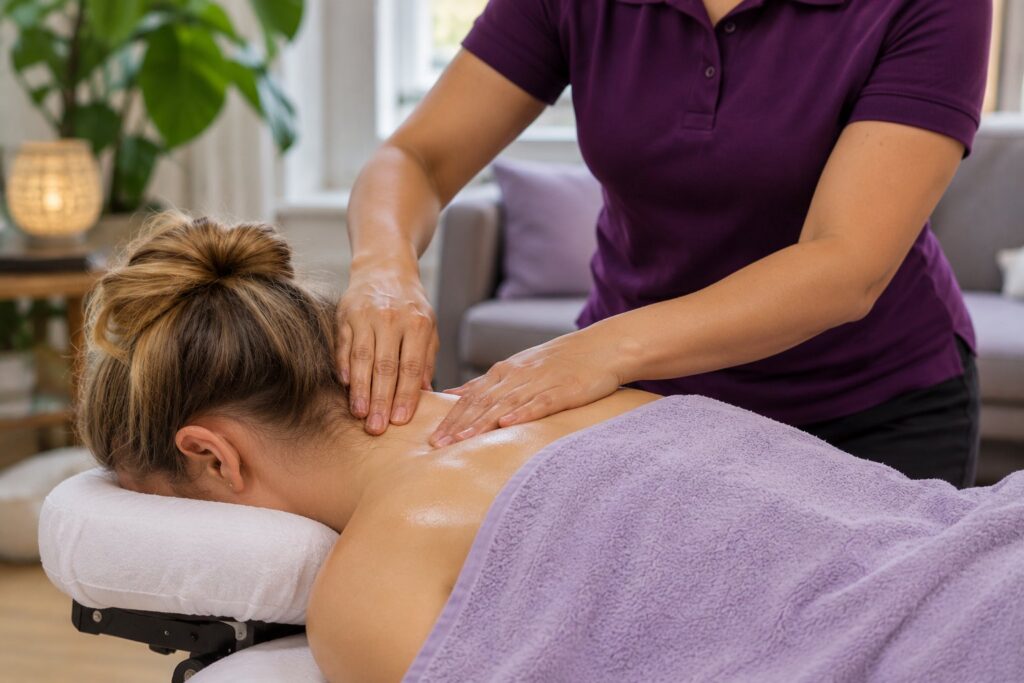
In short: gentle work on the back of your neck and shoulders is routine in a massage; the risks are firm pressure on the front or sides, cracking or forcing the neck, and symptoms that need a GP first. Is it dangerous to massage your neck? Not when the massage stays on the back of the neck, the base of the skull and the tops of the shoulders, at a pressure you are happy with. The neck becomes the wrong place to massage when someone presses hard into the front or sides, when the head is twisted or the neck cracked, and when the pain or stiffness should be seen by a GP before anyone touches it. Before you book a gentle Swedish massage in London, check where the line sits for your neck. Where should you not massage on your neck? Keep firm pressure off the front and the sides of your neck, and off the bones that run down the middle at the back. The NHS describes the thyroid as a small gland in the neck, “just in front of the windpipe”. The carotid arteries also run through your neck, and the lymph glands on each side of it can swell into “tender, painful lumps” when you have an infection, according to the NHS swollen glands page. It is common for massage therapists to leave the front of the throat out altogether and keep any work on the sides of the neck light and slow. The places to leave alone, or to mention before a session starts: the front of your neck, around the windpipe and thyroid the sides of your neck, where pressure should stay light and never dig in the bones of the spine itself: neck work belongs on the muscles either side of it a swollen gland, which the NHS says to show a GP if it is “getting bigger” or has not gone down within a week, or if it feels hard or does not move when you press it, or any lump you have not had checked a bruise, a fresh injury, or skin that is broken or sore any spot where pressure sends pain, tingling or pins and needles down into your arm or hand Which parts of the neck are usually massaged? Neck work in a massage usually happens on the back of the neck, along the muscles either side of the spine, at the base of the skull and across the tops of the shoulders. The upper back and the area around your shoulder blades are often worked at the same time, and that is the better place for firmer pressure if you like it. Can a neck massage cause a stroke? Massage therapists keep work on the front and sides of the neck light, and they do not manipulate the neck: cracking, thrusting and forcing your head round are not part of a massage. If you want to be sure, ask for exactly that before the session starts. The NHS stroke symptoms page uses the word FAST for the main signs of a stroke: face weakness: “one side of your face may droop (fall) and it might be hard to smile” arm weakness: “you may not be able to fully lift both arms and keep them there because of weakness or numbness in 1 arm” speech problems: “you may slur your words or sound confused” time to call 999 The NHS says to call 999 even if the signs have stopped, if they happened within the last 24 hours. Feeling dizzy or falling over, and a severe headache, are among the other symptoms it lists. What about cracking your neck? Cracking or manipulating your neck is not part of a massage, and it is not something to try at home with a towel or a friend’s hands. If you are thinking of having your neck adjusted by a professional, the NHS notes that chiropractors and osteopaths need to be registered by law, and says chiropractic or osteopathy may not be safe if you take blood thinning medicines or are at increased risk of bleeding or stroke. When should you see a GP before a neck massage? See a GP first if your neck matches any of the reasons the NHS gives for neck pain, and get urgent help for the injury and emergency signs below. The NHS neck pain page says to see a GP if: “neck pain or stiffness does not go away after a few weeks” “painkillers like paracetamol or ibuprofen have not worked” “you’re worried about the pain” “you have other symptoms, like pins and needles or a cold arm”, which the NHS says “could be something more serious” After a neck injury. The NHS describes whiplash as “a neck injury caused by sudden movement of the head”, most often after a traffic accident or a slip or fall, and notes that symptoms can take several hours to start. If you have hurt your neck recently, get your GP’s go-ahead before you book. The NHS whiplash page lists the signs that need an urgent appointment with your GP, or NHS 111, when you have injured your neck: “you have severe pain despite taking paracetamol or ibuprofen” “you have tingling or pins and needles on 1 or both sides of your body” “you have problems with walking or sitting upright” “you have a sudden ‘electric shock’ feeling in your neck and back which may also go into your arms and legs” “your hands, arms or legs feel weak” A stiff neck with a temperature. A fever already means we cannot book, and the NHS meningitis page says to get 999 or A&E help straight away for an adult who “has a stiff neck and cannot look at bright lights”, “has a very painful headache” or “has a rash that does not fade when you press it”. A few other health situations mean we cannot book, or need your GP’s go-ahead first (taking blood thinners is one):
Can You Get a Massage Before Acupuncture
Can You Get a Massage Before Acupuncture? Both massage therapy and acupuncture are renowned for their myriad benefits in alleviating pain, reducing stress and promoting relaxation. But when combining these treatments, questions naturally arise: Is it beneficial to get a massage before acupuncture? How do the effects of massage complement or impact an acupuncture session? In this article, we’ll explore the pros and cons of scheduling a massage before acupuncture, helping you make an informed choice for a more effective holistic experience. Can You Get a Massage Before Acupuncture? Massage therapy is the best accompaniment for acupuncture treatment. Massage in fact prepares the body for the acupuncture by making it more receptive to the treatment. Massage aims to release the tensed muscles which can sometimes inhibit the flow of energy or ‘Qi’ that acupuncture aims to restore. This synergy helps the acupuncture needles to penetrate into the body easily. Massage can enhance the pain-relief effect of acupuncture. Combining these therapies may result in a deeper and longer-lasting relief in pain and discomfort. Massage and acupuncture also compliment each other on an emotional and mental level. Massage helps to cleanse the mind and remove emotional tension, which is then balanced by acupuncture, which addresses any underlying energy imbalances. What are the Potential benefits of combining massage and acupuncture in a single session? Massage is well known for its ability to relax muscles, soothe the nervous system, and relieve tension. When combined with acupuncture, which regulates the body’s energy flow (Qi), the relaxation effect is enhanced. Massage relaxes patients before the acupuncture treatment, helping the body to respond more quickly to the needles. This combined approach results in a highly soothing experience that reduces anxiety and promotes overall well-being. Massage increases blood circulation by releasing tight muscles and encouraging lymphatic drainage, enhancing the body’s natural healing processes. Acupuncture supplements this by focussing on specific meridians and points to remove obstructions and enhance the smooth flow of energy. They work together to optimize blood and Qi flow, allowing for speedier recovery from injuries, lowering inflammation, and increasing organ function. Massage and acupuncture are both excellent treatments for chronic and acute pain, but their methods are different. Massage works directly on the muscles, joints, and connective tissues, reducing stress and stiffness. Acupuncture addresses the underlying causes of pain by stimulating the nerve system and producing endorphins. When used together, the treatments offer a complete approach to pain reduction, improving ailments like migraines, back pain, arthritis, and fibromyalgia. Massage stimulates the lymphatic system, allowing the body to discharge toxins and waste more efficiently. Acupuncture, on the other hand, promotes the proper functioning of internal organs such as the liver and kidneys, which are essential for detoxification. When used together, these treatments boost the body’s natural detox processes, leaving patients feeling renewed and invigorated. By addressing many layers of stress and imbalance, the combination of massage and acupuncture can produce deeper and longer-lasting results than each treatment alone. Massage prepares the body for acupuncture by lowering physical tension, but acupuncture ensures that the energy balance created lasts for a longer time. This combined strategy can result in long-term benefits in overall health and fitness. How might massage help prepare the body for acupuncture? Massage can greatly prepare the body for acupuncture by promoting an appropriate physical and mental state for the treatment. Massage effectively relaxes tight muscles, relieves stress, and eliminates stiffness throughout the body. When the muscles are relaxed, acupuncture needles can penetrate the skin and underlying tissues more comfortably, minimizing the discomfort during the session. Massage helps improve blood circulation and stimulate the lymphatic system, as well as eliminating toxins and waste. This synergy supports the concepts of acupuncture, which seeks to balance and unclog energy lines (meridians). Massage increases the body’s sensory awareness, allowing patients to better understand their physical and emotional situations. This awareness can aid the acupuncturist in identifying areas of concern or imbalance that need to be addressed throughout the session. Massage is a mild introduction to therapeutic touch for people who are new to acupuncture or have needle sensitivity. Massage helps relieve any nervousness or tension that may make the acupuncture session uncomfortable. What are the benefits of getting a massage before acupuncture? Massage alleviates muscle tension and promotes relaxation by improving blood flow to the muscles and loosening tight knots in the fascia. When muscles are relaxed, acupuncture needles can penetrate the skin and underlying tissues more easily, reducing discomfort and improving needle placement accuracy. This pretreatment helps the body respond better to acupuncture stimulation. It assists the body in transitioning from a “fight-or-flight” state (sympathetic nervous system activation) to a “rest-and-digest” one (parasympathetic activation). This relaxation prepares the body for acupuncture, which requires the body to be tranquil and receptive for best outcomes. A relaxed state also increases the effectiveness of acupuncture in treating stress-related disorders. Massage therapy causes the release of endorphins (natural painkillers) and serotonin (a mood-enhancing neurotransmitter), which promotes a sensation of well-being. These effects supplement acupuncture’s ability to control neurotransmitter levels, providing additional benefits for pain relief, mood enhancement, and relaxation. It aims to improve blood and lymph circulation, ensuring that tissues are properly oxygenated and nourished. This action supports acupuncture, which increases circulation by treating specific sites along the body’s energy lines (meridians). Together, these treatments promote tissue repair, reduce inflammation, and boost the body’s natural healing mechanisms. Are there any specific massage modalities that are better before acupuncture? Certain massage modalities are particularly effective before acupuncture treatment because they correspond well with the goals of acupuncture, which are to promote relaxation, improve circulation, and balance the body’s energy. Swedish Massage Swedish massage relieves muscle tension and stress with gentle, lengthy, gliding strokes, allowing the body to enter a quiet and receptive state. This relaxation allows acupuncture needles to enter more readily and efficiently, improving their ability to balance the body’s energy (Qi) and promote healing. Swedish massage increases blood flow and calms the nervous
Can Massage Make a Herniated Disc Worse?
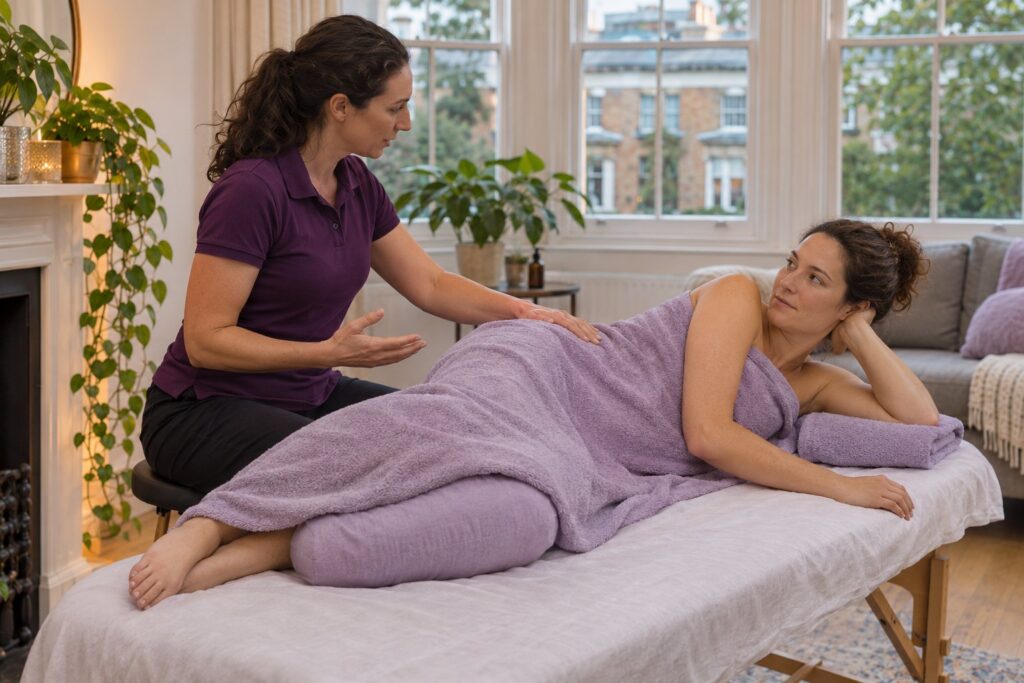
In short: a massage can leave your back sorer if the pressure, stretches or position are wrong, but the bigger risk is booking one when your symptoms need a doctor. Can massage make a herniated disc worse? It can, if the session ignores how your back feels: deep pressure on the sore spot, a twisting stretch, or an hour face down when that position already hurts. Massage is not a treatment for a herniated disc. If you are weighing up a deep tissue massage in London with a disc problem, start with the warning signs below. Can massage make a herniated disc worse? Yes, a session can leave you sorer, and the reasons are mostly about how it is done. Watch for three things: firm pressure worked straight into the painful part of your back stretches that twist or pull through your spine, which are part of some styles such as Thai massage staying in one position, often face down, for longer than your back is comfortable with The NHS gives a useful rule for exercise with a slipped disc: the type of exercise is not important “as long as it does not cause pain or make your back pain worse”. During a massage, use your own version of that test: if something hurts, say so straight away and your therapist should stop or change what they are doing. There is a second, more serious risk. Some back symptoms are a sign that you need medical help, and a massage booked in their place delays that. The warning signs are listed further down. What is a herniated disc? A herniated disc is when a soft cushion of tissue between the bones in your spine bulges outwards. The NHS uses the names slipped disc, prolapsed disc and herniated disc for the same thing. It is painful if it presses on a nerve, and not every slipped disc causes symptoms: the NHS notes that many people never know they have one. When it does cause symptoms, the NHS lists: lower back pain, or neck pain problems bending or straightening your back numbness or tingling in your shoulders, back, arms, hands, legs or feet muscle weakness pain in the buttocks, hips or legs if the disc is pressing on the sciatic nerve (sciatica) The NHS lists the causes as ageing, exercising too hard, lifting heavy objects the wrong way, sitting or driving for long periods, and being inactive or overweight. It also notes that nicotine weakens the disc tissue in the spine. A GP can usually diagnose a slipped disc from your symptoms, and may send you for an MRI scan if things do not get better. When should you see a GP or call 999 instead? If your back pain comes with any of the signs below, do not book a massage. Get medical help first. Call 999 or go to A&E if you have back pain with any of these signs, which come from the NHS slipped disc and back pain pages: numbness around your bottom or genitals you cannot pee, or cannot control when you pee or poo you lose feeling in one or both legs, or have pain, tingling, weakness or numbness in both legs changes in sexual sensation, or problems getting an erection or reaching orgasm chest pain the pain started after a serious accident, such as a car accident The NHS sciatica page adds sciatica on both sides, and weakness or numbness in both legs that is severe or getting worse. Do not drive yourself; ask someone to drive you or call 999. Ask for an urgent GP appointment or contact 111 if you feel hot, cold, shivery or generally unwell, or the pain is severe and started suddenly or is getting worse quickly. See a GP if painkillers are not helping, the pain is not getting better after a few weeks, it is worse at night, you have lost weight without trying, or there is a swelling in your back. In many areas you can also refer yourself to NHS community musculoskeletal (MSK) services, such as physiotherapy, without seeing a GP first. The same signs decide whether a session should stop. A massage should not start, or should stop, if any of them appear, if you notice new numbness, tingling or weakness, or if you feel sharp or spreading pain during the session. If your back is worse in the days after a massage, or you notice numbness or weakness you did not have before, follow the NHS advice above rather than booking again. A gentler massage is not the answer. Can I get a massage with a herniated disc? Often you can, provided none of the warning signs above apply. If you have a diagnosed back or disc condition, check with your GP or physiotherapist before booking if the pain is new, getting worse or flaring, or if you are having treatment for it. The same rule covers a slipped or bulging disc: what decides it is how you are right now, not the name of the diagnosis. Some general health situations, such as recent surgery, an acute injury or blood thinners, mean checking with your GP before you book, and a few rule a massage out altogether; our guide to when not to book a mobile massage lists them. If the pain is very bad right now, the NHS advice is to rest at first and then build up gentle exercise such as walking, swimming or yoga as soon as you can. A massage can wait until the worst has passed. What should your therapist ask before starting? Expect a few questions before any massage for someone with a disc problem. A good therapist will want to know: where the pain is, and whether it travels into a leg or an arm whether you have any numbness, tingling or weakness, and whether it is new who diagnosed the disc and what they said about massage whether you have had recent surgery, an injury
Are Scalp Massagers Good for You

The scalp massager has been burgeoning as a promising contender, but is it truly a boon or a drawback? Let’s find out all about it in this article. So delve in for a scalp massage. What is Scalp Massage? It is a combination of therapeutic techniques gently applied on the scalp either by using the fingertip or specialised tools. It helps promote blood flow, and nutrient delivery and enhances overall well-being. It has been incorporated as a holistic treatment for hair fall and other scalp-related issues. Origin of Scalp Massage The origin of scalp massage can be traced back to the early Ayurvedic treatment in India. It was widely used among the ancient civilizers to treat hair issues and headaches. Over time, it progressed into structured programs and modalities to address old and modern issues posed by poor scalp conditions. It is now integrated into spa settings and hair care routines. What are the Techniques Used in Scalp Massage? Scalp massage involves several noninvasive techniques to manage poor scalp conditions. Effleurage: The gentle and gliding strokes of Effleurage help distribute oil evenly throughout the scalp, promote blood circulation, and release muscle tension. This technique is utilised at the beginning of the massage session to warm up the scalp and prepare it for the long course. Petrissage: It is a therapeutic fusion of kneading and squeezing. It is typically applied to highly knotted areas of the scalp using the palm and fingers together to relieve tension, stimulate hair follicles, and accelerate circulation. Friction: It involves circular or back-and-forth movements with the fingertips or palms of the hands. This technique helps to break up adhesions and knots in the scalp muscles, improve circulation, and promote relaxation. It’s often used to address areas of tightness or soreness in the scalp. Tapotement: It is a comprehensive method of rhythmic tapping or percussion movements with the fingertips or palms of the hands. This technique helps to stimulate circulation, invigorate the scalp, and promote relaxation. It’s particularly effective for awakening the senses and energising the scalp. Vibration: It is the act of gently shaking or vibrating the hands’ palms or fingers on the scalp area. This method aids in promoting relaxation, enhancing circulation, and stimulating the scalp’s nerve endings. It’s frequently used to ease tension headaches, lower stress levels, and promote calmness. Indian head massage is one of the best ways to massage your scalps properly. learn about Indian head massages from here. What are the Benefits of Scalp Massage? Scalp massage is an effective treatment for hair and scalp vulnerabilities. It delivers immense advantages for scalp health: It improves the distribution of blood and nutrients to hair follicles to reduce hair fall. It triggers the release of feel-good hormones to manage stress levels and promote relaxation. It stimulates the nerves in the head to promote the function of the lymph drainage system to mitigate the production of dandruff. It can help relieve tension headaches, improve the quality of sleep, and enhance mental well-being. Are Scalp Massagers Good for You? A scalp massager is a hand-handled equipment designed to give the effect of manual scalp massaging. Its adaptability enables its soft bristles to reach all areas of the scalp, even the complex places. Applying pressure consistently can be challenging during a manual massage but massage scalpers provide consistent pressure and stimulation, making it an effective tool for scalp treatment. Scalp Massage Vs Scalp Massagers: Which is best? Though both scalp massage and massager offer profound benefits in maintaining scalp well-being, scalp managers can be slightly disadvantageous when compared to certain factors. Scalp massagers may not be an ideal tool for individuals with sensitive scalps. It may cause them discomfort or irritation. It does not offer the broader advantages of manual scalp massage. It may make individuals neglectful of other scalp care components such as applying oil, shampooing, and moisturising. Scalp massagers are often programmed to deliver the same effect to their users with diverse needs. It will not facilitate tailored treatments to suit individual preferences. Conclusion Scalp massage therapies and scalp massagers render numerous benefits for hair growth and scalp health. However, it’s important to be mindful of potential drawbacks such as scalp sensitivity, hygiene concerns, and effectiveness. By incorporating scalp massage into a regular hair care routine and using scalp massagers responsibly, individuals can enjoy the numerous advantages while minimizing any potential risks.
How to Adapt Massage Treatments for Male and Female Clients
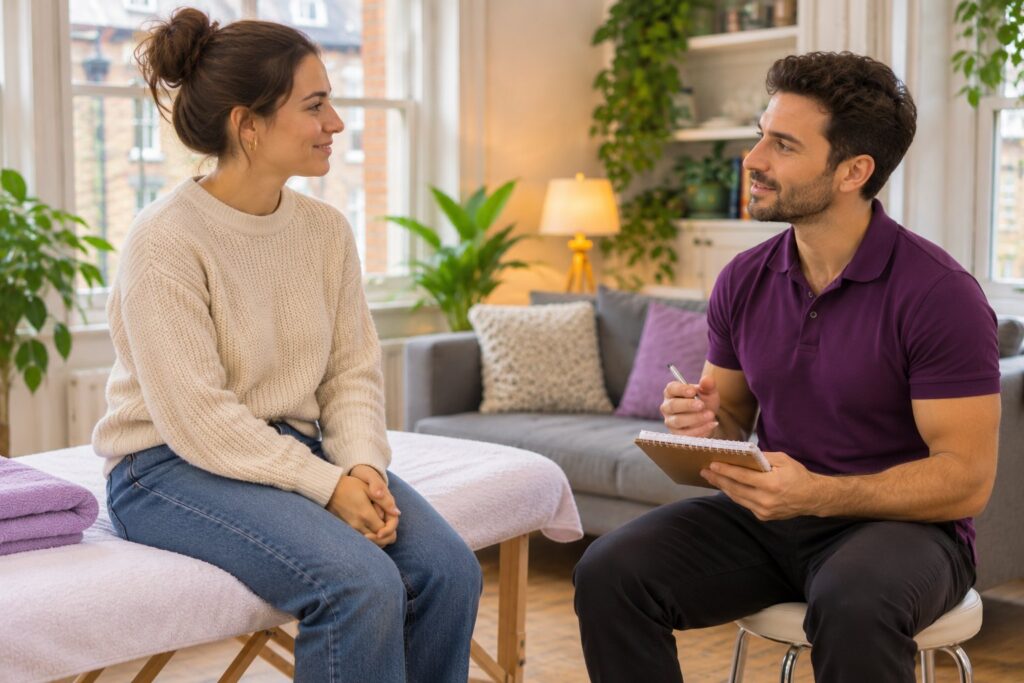
In short: a good massage is adapted to the person on the table, not to their gender; pressure, focus areas, draping and the therapist you book are all set by what you ask for, and you can choose a female or male therapist when you book with us. How to adapt massage treatments for male and female clients comes down to the person, not the gender. The adaptations that matter come from you: how firm you like it, which areas you want worked, what you would rather were left alone, and who you feel most comfortable with. If you already know you would like a woman to give your massage, our female massage therapists in London travel to you. Does a man need a different massage from a woman? Not because of gender. Two people of the same sex can want completely different sessions: one wants firm, slow work on the shoulders, the other a light, flowing full-body massage. Your therapist adapts to what you tell them, and to what they notice as they work, such as an area you tense when it is touched. What changes the massage: The pressure you ask for. From light to firm, set at the start and changed at any point. The areas you want worked, and the ones you want left out. Your health, including injuries, surgery, medication and pregnancy. The type of massage you book, from Swedish to deep tissue to reflexology. What does not change it: whether you are a man or a woman. If you are deciding what to book, start with the massage types we offer rather than with gender. Can you choose a male or female therapist? Yes. When you book, tell us whether you would like a female or male therapist, and we will show you who is free for your date. Liked your therapist? Request the same person for your next booking, subject to availability. If you have no preference, say so; it gives you the widest choice of time. For a few treatments, such as lymphatic drainage, fewer therapists offer it, so the choice can be narrower; ask when you enquire. For women booking a female therapist, our female massage page shows who visits. If you would like a man, see our male massage therapists. How is pressure adapted? Pressure is agreed between you and your therapist, not assumed from your build or your gender. A tall, muscular client may want a light massage; a slight one may want it firm. Say how firm you like it at the start, and say again during the session if it is too much or not enough. There is a short list of what to say for each sensation in our deep tissue guide. How is draping handled? Draping works the same way whoever you are: it is standard for you to decide how much to take off and for a towel to cover everything except the area being massaged. Our guide to what to wear for a massage explains the options in full, including treatments where you stay dressed. What professional boundaries should you expect? A professional massage is professional with every client. In a professional massage, the therapist works only on the areas you agreed and changes or stops anything as soon as you ask. You can stop the massage at any time, for any reason. A professional massage therapist offers massage only. What to include in your booking Four things are worth including when you book: The treatment you would like, or “not sure” if you would like help choosing. Female, male or no preference for your therapist. Pressure, if you know: light, medium or firm. Health details, such as an injury, recent surgery, medication or pregnancy. If you are pregnant, tell us when you enquire and read our pregnancy massage page first. Certain health situations mean waiting or checking with a GP; our mobile massage explainer covers them. Book a massage with a female therapist, or with a male therapist: a 60-minute Jazzy Hora is £65 during the day. Travel is additional: the minimum charge is £15 during the day and £20 at night. The exact travel charge depends on your postcode. Payment is on arrival, with no card needed to book. Send your postcode, your preferred therapist and time through our online booking page.
What is Mobile Sports Massage? Everything You Need To Know

What is Mobile Sports Massage? Everything You Need To Know Mobile Sports Massage is a growing trend in the field of sports. Athletes and the general population alike are increasingly gravitating towards sports massage for holistic experiences. In this light, we dedicate this article to paint a comprehensive picture of mobile sports massage and its effectiveness in the contemporary world. What is Mobile Sports Massage? Sports massage is a proactive approach utilised to treat the misalignment in certain muscle groups, soft tissue, and joints. Massage therapies employ tailored massage techniques aiming to release muscle tension, improve joint mobility, and promote overall well-being. Mobile Sports Massage enables individuals to receive massage treatment at their comfortable location. Origin and Evolution of Sports Massage The practice of sports massage can be traced back to ancient civilisation. It was a traditional practice of Greeks to treat their athletes. Sports massage continued to be subjected to many changes through different cultures and eras, with notable contributions by massage practitioners.Jack Meagher revitalised the practice of sports massage by introducing personalised treatments to meet the demands of athletes. However, it was during the mid-20s that sports massage gained a refined structure and widespread popularity. Today it is an integral part of athletic training and rehabilitation. Progression of Sports Massage in the Present Setting The technology has had a great impact on the development of sports massage. The virtual reality and modern tools such as guns and vibrating foam rollers, have contributed to a more enhanced relaxation and recuperation sports massage experiences. Therapists are adapting their massage practice and improving their skills to satisfy the novel needs and challenges faced by athletes and fitness enthusiasts. They are pursuing advanced training in sports massage techniques beyond traditional methods. They are incorporating various manipulation techniques including deep tissue massage, myofascial release, and neuromuscular techniques to provide more therapeutic care. People are recognising the accessibility and convenience of mobile sports massage. It allows individuals to receive more personalised and concierge-level service with minimal downtime. Thus, the progression of sports massage seamlessly aligns with modern auras and demands to provide a comprehensive approach to the massage industry. Techniques Used in Sports Massage Massage therapists use a combination of techniques to cater to the unique requirements of clients. Amongst the various massage procedures, only the commonly used massage techniques are included here: Effleurage: It is a sequence of sliding circular strokes typically performed with hands, fingers, elbows, forearms, and thumbs. Massage practitioners employ this technique both at the beginning and at the end of the session, aiming to relax the muscles, improve blood circulation, and foster a sense of relaxation. Petrissage: It involves a range of motions such as kneading, lifting, and squeezing muscles using hands, fingers, and thumbs. This technique focuses on manipulating deep muscle tissues to improve flexibility, and blood flow and release muscle knots. Tapotement: It is a type of rhythmic tapping, pounding, and percussion movement integrated with the use of the ulnar parts of the hand. Therapists use this method to work on soft muscle regions, intending to invigorate the nervous system and stimulate muscles for stress relief and proper blood flow. Friction: Therapists exert degrees of pressure across the grain of muscle fibres to break down adhesions and realign tissues. Vibration: Vibration or shaking combines rapid movements of fingertips or the heel of the hand back and forth to release stiffness and improve joint mobility. Benefits of Sports Massage The primary solutions sought from sports massage are reduction of overall muscle tension and relaxation. Additionally, sports massage confers numerous benefits to its recipients. Ceaseless kneading, pounding, and tapping can improve the efficient flow of blood, and enhance the distribution of nutrients and oxygen. It also aids in the removal of metabolic waste products. Regular sports massage sessions can identify and address potential issues including muscle imbalance, chronic pains, and areas of stiffness. It can reduce the risk of injuries and aid in fast recoveries. The unique approach of sports massage contributes to mental well-being, a positive mindset, mental focus, and a sense of overall well-being. Advantages Ripped Through Mobile Massage Sessions Mobile sports massage services allow recipients to receive more attentive and self centred treatment. The convenience of receiving massage treatments at the preferred location can eliminate the cost and time of travelling to spas or clinics. Its adaptability and flexibility allow individuals to incorporate it into their wellness program and receive therapy at times that suit their needs and training regimens. How does Sports Massage set itself apart as a Valuable Treatment in the World of sports? In a world that depends on pre-workouts and protein supplements to enhance athletic performances, sports massage stands out as a legitimate holistic solution. Its profound effects extend beyond the scope of nutritional supplements. Sports massage involves unique techniques that alleviate muscle tension, improve circulation, and enhance the flow of nutrients and oxygen to muscles. Doing so can provide athletes with a natural boost to their performance without relying on potentially harmful and short-lived compounds found in some supplements. Moreover, regular massage sessions offer long-term benefits to athletes, contributing to their overall well-being and performance Furthermore, Mobile sports massage can be modified and adjusted according to an athlete’s preferences. It can easily be integrated into training programs. Who Can Benefit From Sports Massage? Athletes and nonathletes alike can reap massive benefits from sports massage. While athletes and fitness enthusiasts depend on sports massage for better performance and overall wellness, individuals suffering from everyday stress can utilise it for relaxation. Sports massage can address muscle imbalances and contribute to better posture, especially for those with desk-bound jobs. It is also beneficial to people dealing with chronic pain or discomfort. Sports massage is not exclusively designed for athletes. Its myriad therapeutic benefits can enhance the overall well-being of individuals from all walks of life. Conclusion Sports massage has emerged as a practical and sustainable component of overall wellness. The added flexibility and personalised
How Much Does a Massage Cost in the UK?
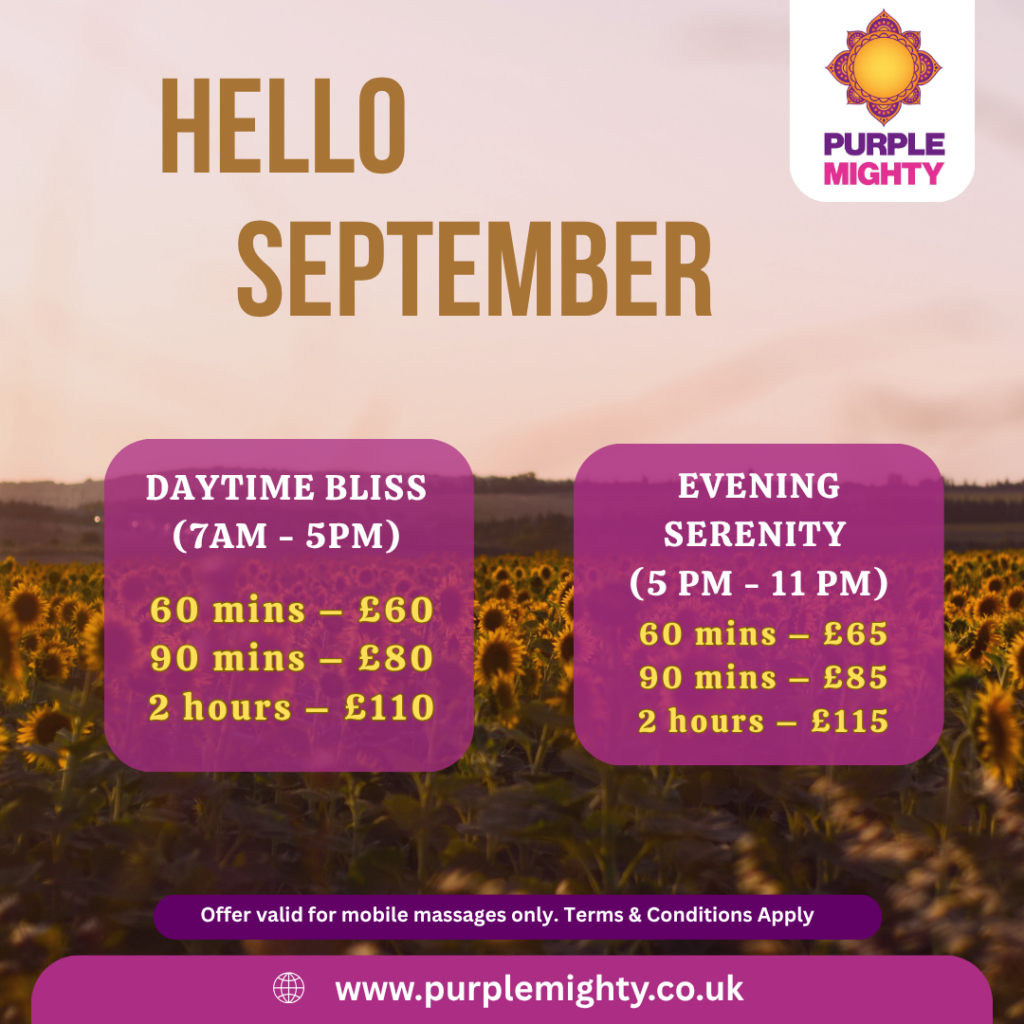
In short: a 60-minute massage in the UK costs around £50 to £70, and the typical salon price is £59. Expect to pay more in London, more for a home visit, and more for longer or specialist sessions. How much does a massage cost in the UK? A standard one-hour massage at a salon or clinic is usually between £50 and £65, with a median of £59 across more than 1,100 UK salons whose prices were checked in October 2026. The cheapest tenth charge about £42 or less, and the most expensive tenth £80 or more. Where you live, what kind of massage you book, how long it lasts and whether the therapist comes to you all move that figure up or down. This guide breaks the price down by each of those, so you know what a fair quote looks like before you book. How much is a massage in the UK, on average? Most UK massage price lists start at a 60-minute session, and that is the fairest number to compare. Session Typical UK price What the figure is based on 30 minutes £30 to £50 Bark’s UK price guide 45 minutes £45 to £70 Bark’s UK price guide 60 minutes £50 to £65 (median £59) Appointica, 1,151 UK salons, October 2026 60 minutes, deep tissue £50 to £69 (median £60) Appointica, 680 UK salons, October 2026 Two things are worth knowing when you read any price list. First, the published price is usually for the massage alone; extras such as hot stones or a scalp treatment are often added on top. Second, many places quote “from” prices, so check which session length the headline price refers to before you compare. How much does a full body massage cost? A one-hour full body massage in the UK typically costs £50 to £65 at a salon, and up to £90 at the upper end. An hour is enough to work through the back, shoulders, arms and legs at an unhurried pace. If you want extra time on your neck and shoulders as well, 90 minutes is the more comfortable choice. It rarely costs one and a half times the hour: at Purple Mighty, for example, 90 minutes is £85 against £65 for 60. Most “full body” treatments are Swedish or a relaxing oil massage, which is why they sit at the lower end of a price list. Ask for deep tissue work across the whole body and the price normally moves up a step. How much does a deep tissue massage cost? A 60-minute deep tissue massage in the UK has a median price of £60, and most salons charge between £50 and £69. That makes it only slightly dearer than a standard massage, even though the work is slower and firmer. What changes the price is mostly the person, not the technique. Therapists who specialise in firm, focused work, or who combine massage with sports or clinical training, tend to charge more. If you are booking deep tissue for the first time, tell the therapist how firm you like it before they start; a good one will check in as they go and adjust the pressure. How much is a sports massage? A sports massage usually costs £40 to £70 for an hour, depending on where it is done. University and community sports clinics are often the most affordable. Loughborough University’s sports clinic, for example, charges £47 for 60 minutes to the public. Hospital and private physiotherapy clinics charge more. West Hertfordshire Teaching Hospitals NHS Trust lists a 45-minute private sports massage at £65. Independent therapists and gyms typically sit between the two. Session lengths for sports massage are often shorter, 30 or 45 minutes, because the work is focused on the areas your training loads most. Compare prices per minute, not per session. How much does a back massage cost? A back, neck and shoulder massage usually costs £30 to £50 for 30 minutes in the UK, the same band as any half-hour treatment. Some salons sell it as a 45-minute session for £45 to £70. A half-hour back massage is good value if one area is all you want worked on. If you want the work to reach the lower back and hips as well, or you prefer a slower pace, book an hour; the extra cost is usually smaller than the price of a second short session later. Do massage prices change across the UK? Yes, and London is the most expensive place to book. Bark’s UK price guide puts a typical session at £40 to £80 in the London area, £30 to £70 across the South, South West and Midlands, and £30 to £60 in the North and outer regions. The gap is mostly rent and demand. A city-centre spa pays far more for its treatment rooms than a therapist working from a home studio in a smaller town, and the price list reflects it. How much does a massage cost in London? In London, Bark’s guide puts a typical session at £40 to £80, and hotel spas charge more again. Mobile services that come to your home start from around £65 to £70 for a session: Urban lists London prices from £69, and our own daytime hour is £65, with travel added in both cases. Central London and other high-rent areas sit at the top of the salon range. Is a massage at home more expensive than a salon? Usually a little, because the price includes the therapist’s travel. In exchange, you skip your own journey there and back, and you can stay where you are afterwards instead of heading out into the cold with oil still on your skin. When you compare a home visit with a salon, compare the total: Salon: the session price, plus your own travel time and fare. Home visit: the session price, plus a travel charge, which is usually confirmed from your postcode when you book. At Purple Mighty, our London therapists come to your home,
What Is an Indian Head Massage?
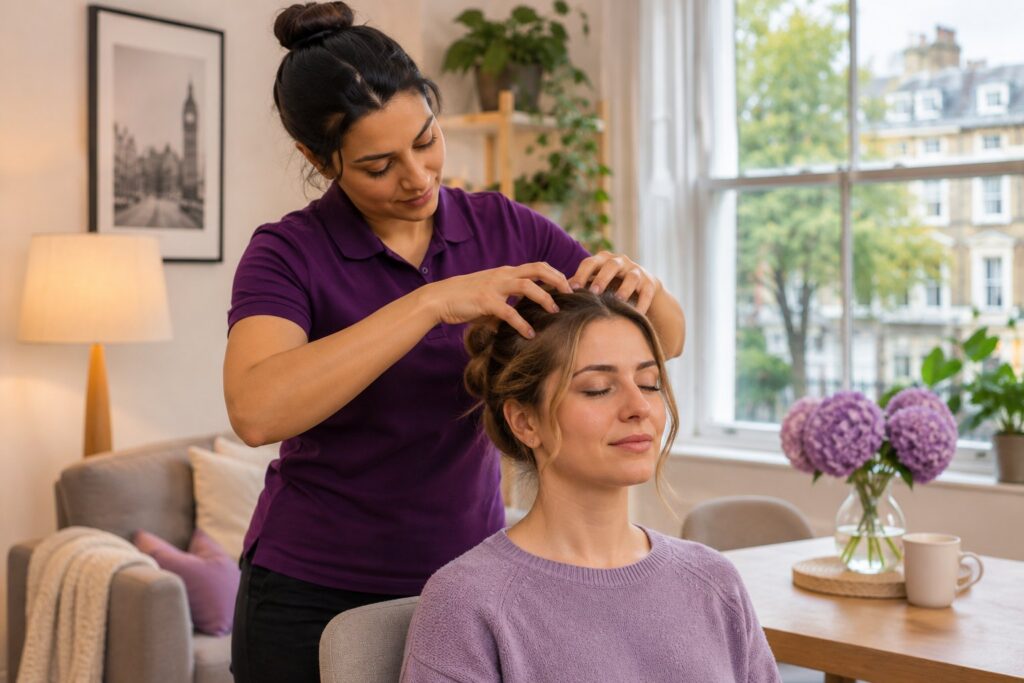
In short: an Indian head massage is a seated massage of your upper back, shoulders, upper arms, neck, scalp and often your face, usually given while you stay dressed, with or without oil. What is an Indian head massage? It is a massage of the top half of your body, given while you sit upright in a chair. The therapist starts at your shoulders and upper back, moves through your upper arms and neck, spends a good stretch of time on your scalp and often finishes on your forehead, cheekbones and temples. You keep your clothes on, and oil in your hair is optional. It grew out of champi, a traditional head and hair massage from India, and it is sometimes sold under the name Champissage. Our therapists give Indian head massage in London at your home, your hotel room or your workplace, anywhere within the M25. No table is needed, so it works as well at a desk or in a hotel armchair as in a dining chair at home. Where does Indian head massage come from? The treatment’s roots are in champi, an Indian tradition of head massage usually done with hair oil. In his book on the treatment, Narendra Mehta writes that the version practised by women in India was restricted to the head and hair, and that he extended the techniques to the neck, shoulders and upper arms. Mehta came to England from India in the early 1970s to train as a physiotherapist, and he is credited with bringing Indian head massage to the UK. He trademarked his own version as Champissage and taught it at his London Centre of Indian Champissage. Books and UK spa guides describe the treatment as based on Ayurveda, the traditional system of medicine in India, which is why you will also see it called an Ayurvedic head massage. Today’s version, as spa and training guides describe it, covers the upper back, shoulders, neck, head and face rather than the head alone. How does an Indian head massage session run? An Indian head massage works upwards, from your shoulders to your scalp and face, while you sit still. A typical session runs like this: A short chat first. Therapists usually ask which areas feel tight, what pressure suits you, and if you take any medication or have a health condition they should know about. Upper back and shoulders. Kneading and firm pressure across the tops of your shoulders and between your shoulder blades. This is often the firmest part of the session. Upper arms. Squeezing along your upper arms, between the shoulder and the elbow. Neck. Lighter work along the back and sides of your neck, sometimes with a slow, gentle stretch as the therapist tilts your head to one side. Say straight away if a stretch feels like too much. Scalp. Fingertip circles, rubbing, light tapping and gentle tugs on small sections of hair. If you have chosen oil, this is where it goes on. Face. Light, held pressure across your forehead, around your eyes and along your cheekbones, usually ending at your temples. Which pressure points does it use? Indian head massage includes steady fingertip pressure on points around the face and head. One UK training provider lists points on the forehead, around the eyes and on the cheekbones, and spa guides describe the treatment as acupressure on the head, face, neck and shoulders. What you notice is a held press for a few seconds at a time rather than a moving stroke. Does an Indian head massage use oil? It can, but it does not have to. Traditional champi uses hair oil, and many therapists offer oil on the scalp, but the treatment can also be given dry, through light clothing, as UK training guides and charity therapy services describe. Oil changes the rest of your day. A spa guide warns that your hair can feel stiff afterwards and smell strongly of the oils used, so if you are heading out, either plan time to wash your hair or ask for a dry session. Your therapist brings the oil, and one of the house oils is almond, so mention a nut allergy when you enquire; our mobile massage explainer lists the rest. Do you sit or lie down for an Indian head massage? You usually sit. Mehta gave the treatment in a chair, and UK guides describe it as a seated massage. You sit with your back straight and your feet flat on the floor, which lets the therapist reach your shoulders, neck and scalp from behind without you having to turn over. If sitting upright for an hour is uncomfortable for you, ask whether the session can be given lying down. A table is only brought if you request one, so add that to your booking. Do you stay dressed for an Indian head massage? Yes. Because the massage covers only the top half of your body and can be done without oil, you do not need to undress for it. A loose top with an open neckline is the easiest for a therapist to work through; one spa guide points out that a polo neck is a bad idea. If you want oil on your shoulders as well as your scalp, a vest or a wide neckline leaves that skin within reach without taking your top off. For oil massages where you do undress, see how towels and clothing work in a Swedish massage. How long does an Indian head massage take? At a salon or spa, an Indian head massage usually takes 20 to 45 minutes, going by the ranges UK spa and training guides give. Our shortest home visit is 60 minutes, and we do not offer a 30-minute booking, so a home session runs longer than those salon times. You can also book 90 or 120 minutes. What does an Indian head massage feel like? It feels varied, because the pressure changes as the therapist moves up your body. Your shoulders get
What Is Mobile Massage?
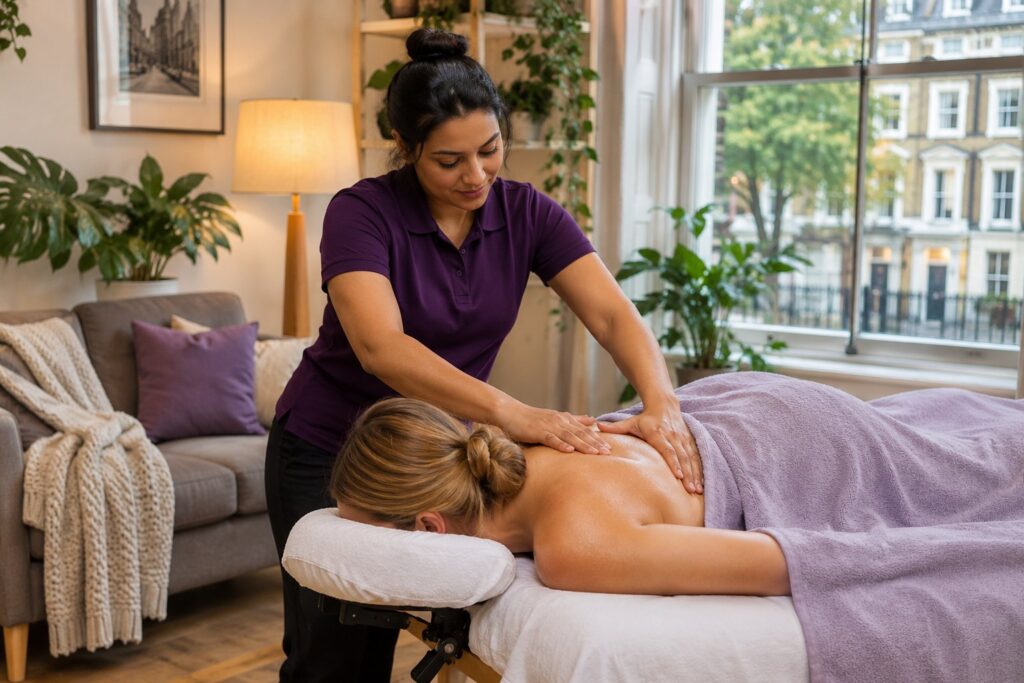
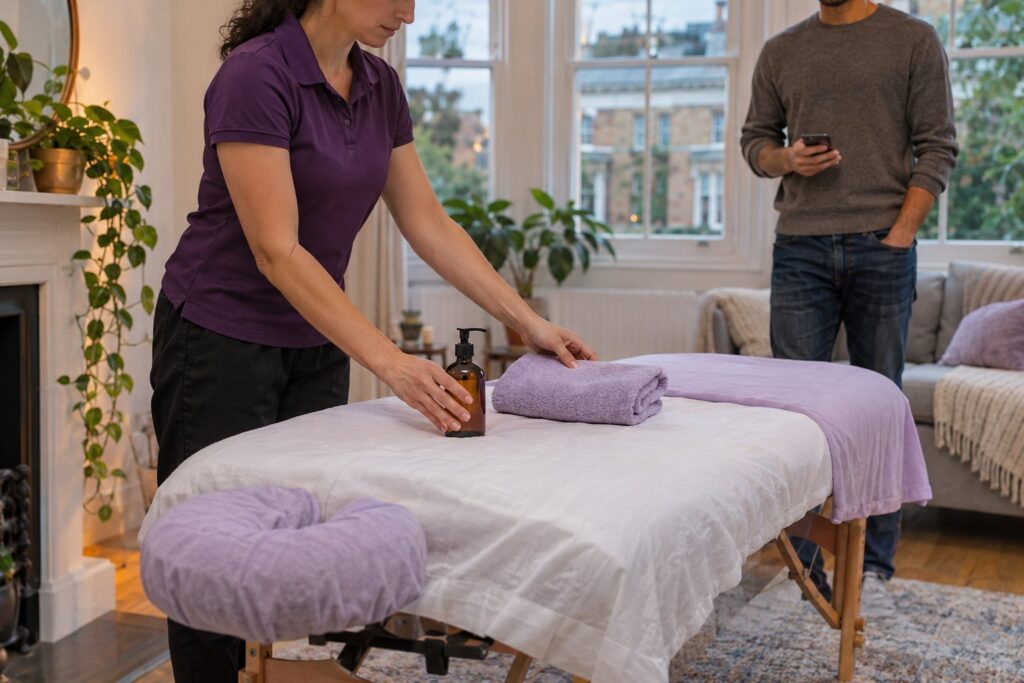
In short: mobile massage is a professional massage that comes to you. A therapist travels to your home, hotel room or office with the oil, gives the session there, and you pay after they arrive. What is mobile massage? It is a massage given at your own address by a therapist who travels to you, instead of you travelling to a salon or spa. You book a time, the therapist rings your doorbell, and the session happens in your living room, bedroom, hotel room or office. When it ends, you stay where you are. Purple Mighty has offered mobile massage in London since 2022, with over 15,000 bookings across the city and a 4.8-star rating from 141 Google reviews. What is a mobile massage therapist? A mobile massage therapist is a massage therapist who works at clients’ addresses rather than in a fixed treatment room. The massage is the same work you would get in a salon. What changes is where it happens and who does the travelling. You may also hear it called home massage, in-home massage or a home visit massage. They all describe a masseuse or masseur who comes to your house. Our team has more than 40 active therapists, with experience ranging from about one year to 17 years. Qualifications held across the team include NVQ Level 3 massage, diplomas in Swedish, deep tissue and Indian head massage, Thai massage school training and a VTCT Level 3 Diploma in Sports Massage. Female and male therapists are both available on request, and some of the team speak Romanian, Polish or Hindi as well as English. How does booking a mobile massage work? Booking takes four steps, and you pay nothing until your therapist has arrived. Enquiry. Tell us the treatment, session length, date and time you want, plus your postcode. You can send it through our online booking page. No card is needed to book. Confirmation. We match you with a therapist who covers your area and let you know the estimated arrival time and the travel charge for your postcode. Arrival. Your therapist arrives with the massage oil and anything you asked for when booking, such as a massage table. Payment. You pay once your therapist has arrived. Most of our clients book one to two weeks ahead. If you get on well with your therapist, you can ask for the same person next time, subject to their availability. At least half of our clients book again. Who will your therapist be? Your therapist will be one of our 40-plus active therapists. We keep each therapist’s right-to-work documents on file, along with their certificates where they hold them, and the company holds public liability insurance. What happens during a mobile massage? Once your therapist is through the door, the session runs much as it would in a salon. Expect them to set up in the space you have cleared and ask a few questions first: which areas you want worked on, how firm you like the pressure, and about any injuries or health conditions. What you wear, and how towels keep you covered, are explained in our guide to what to expect from a Swedish massage. During the session, speak up if you want firmer or lighter pressure, or more time on your shoulders. A good therapist checks in and adjusts as they go. When the time is up, they pack away and leave. You can go straight to bed or the shower. What does the therapist bring, and what do you provide? Your therapist brings the massage oil. Our therapists work with coconut, almond, lavender, argan and grapeseed oils, mostly unscented. Almond oil comes from a nut, so tell us about a nut allergy when you book. A massage table comes on request only, so ask for one when you book if you want it. Some therapists carry bed rolls instead. You provide three things: clear floor space for the therapist to set up and move around a few clean towels somewhere for the therapist to wash their hands Getting ready takes a few minutes. Warm the room, put your phone on silent and have the towels to hand before your therapist arrives. For a full checklist, from the room and towels to pets and parking, see how to prepare for a mobile massage. How is mobile massage different from a salon or spa? The massage itself is the same. The setting, the travel and the extras are what change. Mobile massage Salon or spa Where it happens Your home, hotel room or office Their treatment room Travel The therapist travels to you, and a travel charge is added You travel there and back Afterwards You stay where you are You get dressed and head out Facilities Your own space, music and shower Some spas add a sauna, steam room or pool What you provide Floor space, towels, somewhere to wash hands Nothing Price Session plus travel Session only, usually a little less A spa makes more sense when the facilities are part of the treat, or when you have nowhere at home to set up. A home visit suits you when the journey is the hard part: after a long-haul flight into a London hotel, with small children asleep upstairs, late in the evening when you would rather not go out again, or when getting to a salon is difficult because of mobility. Can you have a mobile massage at a hotel or your office? Yes. If you are staying in a London hotel, your therapist comes to your room. For your workplace, see our page on massage at your office. At home, book an evening after work or a weekend session. You can also book a couples massage at home. Which types of massage can you have at home? All 42 of our active therapists offer Swedish massage and the Purple Classic, which is our blend of deep tissue and relaxation, pitched not too soft and not too deep. Twenty-three offer deep